Serving Savannah, GA & Austin TX

.png)
Mon - Sunday: 8am- 8pm

.svg)
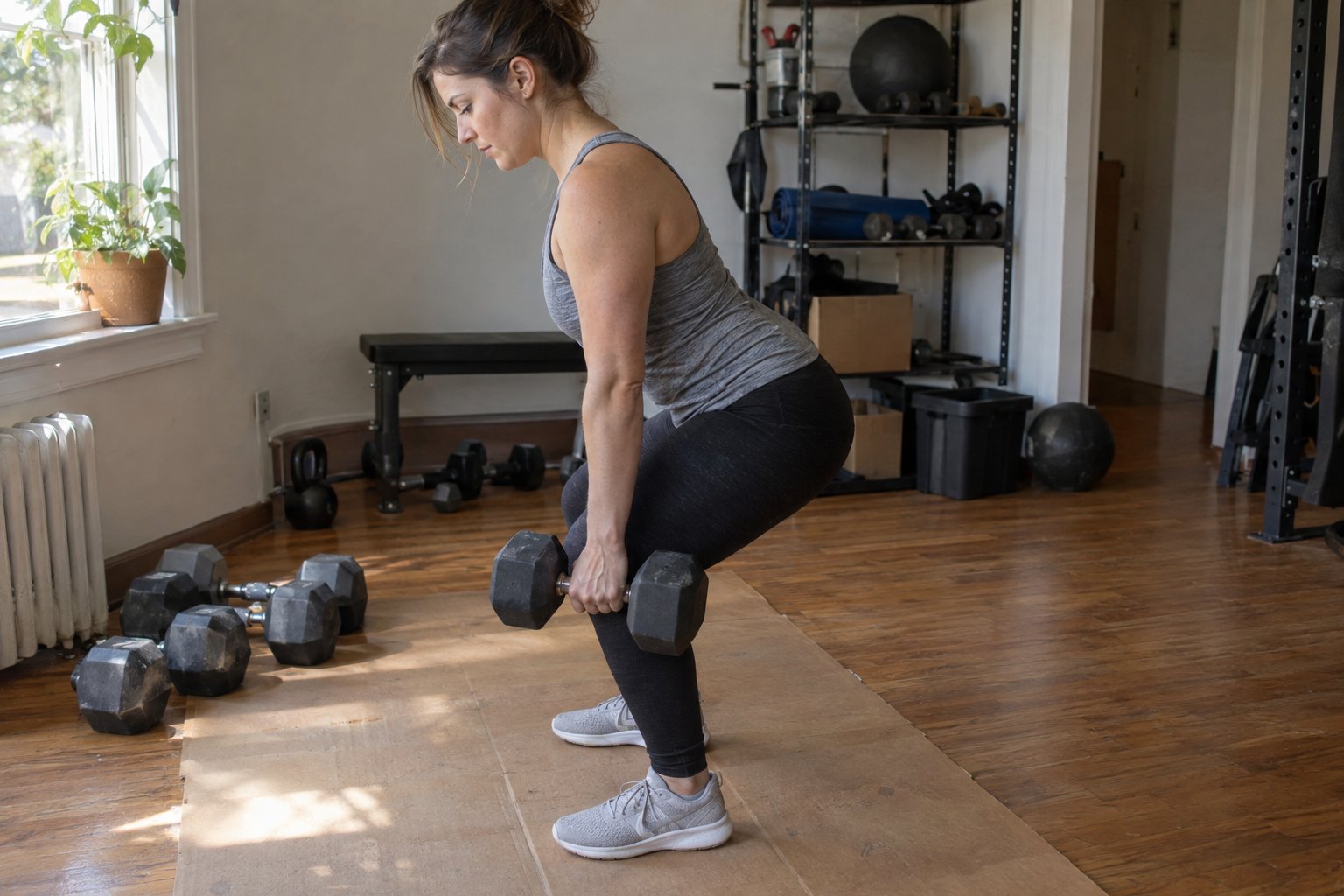
Moving a home gym safely comes down to breaking heavy equipment into smaller, manageable pieces, distributing weight so no single box or person is overloaded, and protecting your floors from steel frames and dropped plates. Home gyms combine the worst of both worlds for a move: awkward shapes and genuinely dangerous weight. Treat it like the specialty item it is, and the rest of the move goes much easier.
We see more home gyms in Savannah garages and spare bedrooms every year, from single power racks to full setups with cable machines and rubber flooring. Unlike a treadmill or a single piece of furniture, a home gym move usually means coordinating dozens of individual pieces, several of which weigh more than a washing machine. Here is how to get it done without hurting yourself or your subfloor.
The short answer is to never carry loaded equipment as one unit. Break everything down to its lightest safe component, use two people minimum for anything over 50 pounds, and stage a clear, obstacle-free path before you lift a single plate.
Most home gym injuries during a move happen not from the heaviest single item, but from fatigue after hours of repetitive lifting. Pace yourself, take breaks, and never twist your torso while holding weight. If your setup includes a full power rack, a loaded barbell, and multiple plate trees, this is exactly the kind of job where hiring residential moving labor services for just the heavy lifting portion of the move can save your back without requiring a full-service move.
Walk the route from the gym space to the truck before you move anything. Remove rugs, secure loose cords, and prop doors open. A clear path matters more here than in almost any other room because you will be making repeated trips with weight in your hands.
Most squat racks and power racks bolt together in sections, and the fastest way to move one is to reverse the assembly instructions rather than guessing. Take photos of each connection point before you start, bag and label the bolts by section, and remove the uprights from the base before lifting anything.
If you no longer have the manual, search the model number online rather than forcing a disassembly order that was not designed into the frame. Racks are engineered to come apart at specific joints, and prying at the wrong point can bend the steel or strip a bolt hole.
An adjustable wrench, a full set of Allen keys, and a rubber mallet cover most home gym hardware. Keep a small parts box or labeled bags on hand so nuts and bolts from one section never mix with another. Losing a single specialty bolt can leave an otherwise fine rack unusable at the new house.
Weight plates and dumbbells should never go in a standard cardboard box. Cardboard was not built for that kind of concentrated weight, and a box bottom giving out on a staircase is how floors and toes both get damaged. Instead, move plates a few at a time by hand or on a hand truck, or use a sturdy plastic tote rated for the load.
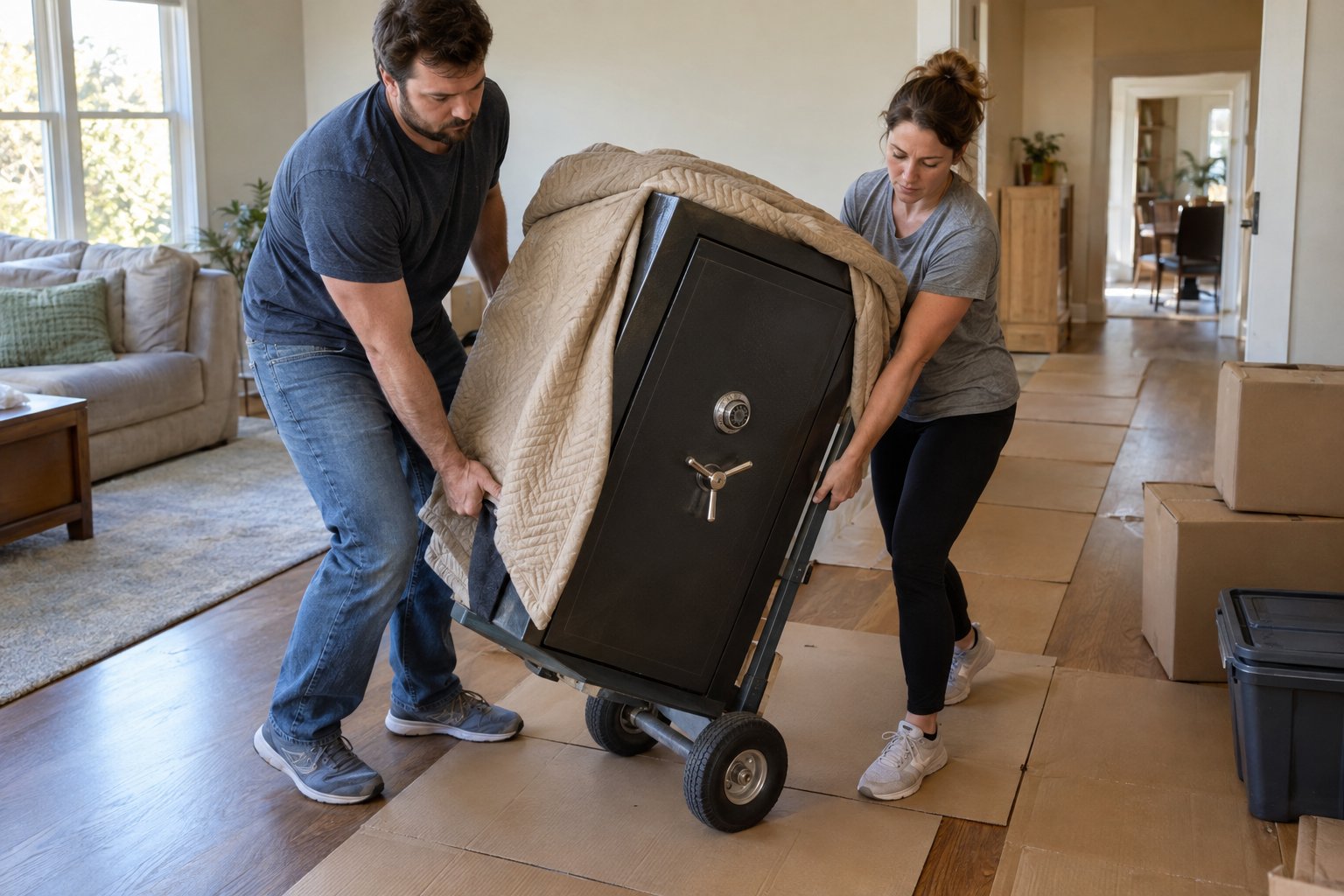
A useful rule: if you cannot comfortably lift the loaded container with two hands and keep your back straight, it is too heavy to carry that way. A hand truck distributes the load onto wheels instead of your spine and is worth the trip to grab one even for a short move across town.
Rubber-coated dumbbells and kettlebells can go into small or medium boxes in limited quantities, but weigh the box before you seal it. A box that feels light in your hands can still be too heavy to carry safely once it is packed full of iron.
Floors take more damage from home gym equipment than almost any other category of household item, because steel frames and dropped plates do not forgive. Lay down furniture sliders or moving blankets on hard flooring before you drag anything, and never roll a loaded barbell or plate cart directly across hardwood or tile.
For rubber gym flooring or interlocking mats, number the tiles as you pull them up so reassembly at the new house is fast. Roll rubber mats rather than folding them; folds can crease permanently over time.
Measure your power rack's widest disassembled piece against your doorways and elevator dimensions before moving day. A rack that came apart easily in the garage can still be too wide for a narrow apartment hallway if you skip this step.
A DIY move works for a couple of dumbbells and a yoga mat. Once you are dealing with a power rack, an Olympic barbell setup, or a cable machine, professional help earns its cost back in avoided injuries and floor damage. Many homeowners split the difference by handling their own packing and hiring movers just for the heavy lifting and loading.
If your gym equipment is part of a larger household move, residential moving services can fold the gym into the rest of the job. If the gym is the only heavy thing you need help with, moving labor services alone are often the more cost-effective route. Either way, tell your moving company about the equipment in advance so they bring the right dollies and straps.
A home gym move rewards patience more than muscle. Break equipment into its smallest safe pieces, protect your floors before you start dragging anything heavy, and be honest with yourself about which parts of the job need an extra set of hands. If you are ready to get a plan in place, get a moving quote from BC Brothers Moving and let us help you figure out exactly what kind of help your setup needs.
BC Brothers Moving & Storage is a locally owned, licensed and insured moving company rated 4.9 stars across 800+ reviews. Residential, commercial, long-distance, packing and storage — handled by one crew.
Movers in Savannah·Residential Moving·Packing Services·Long-Distance Moving·Storage

.svg)





.svg)
.svg)