Serving Savannah, GA & Austin TX

.png)
Mon - Sunday: 8am- 8pm

.svg)
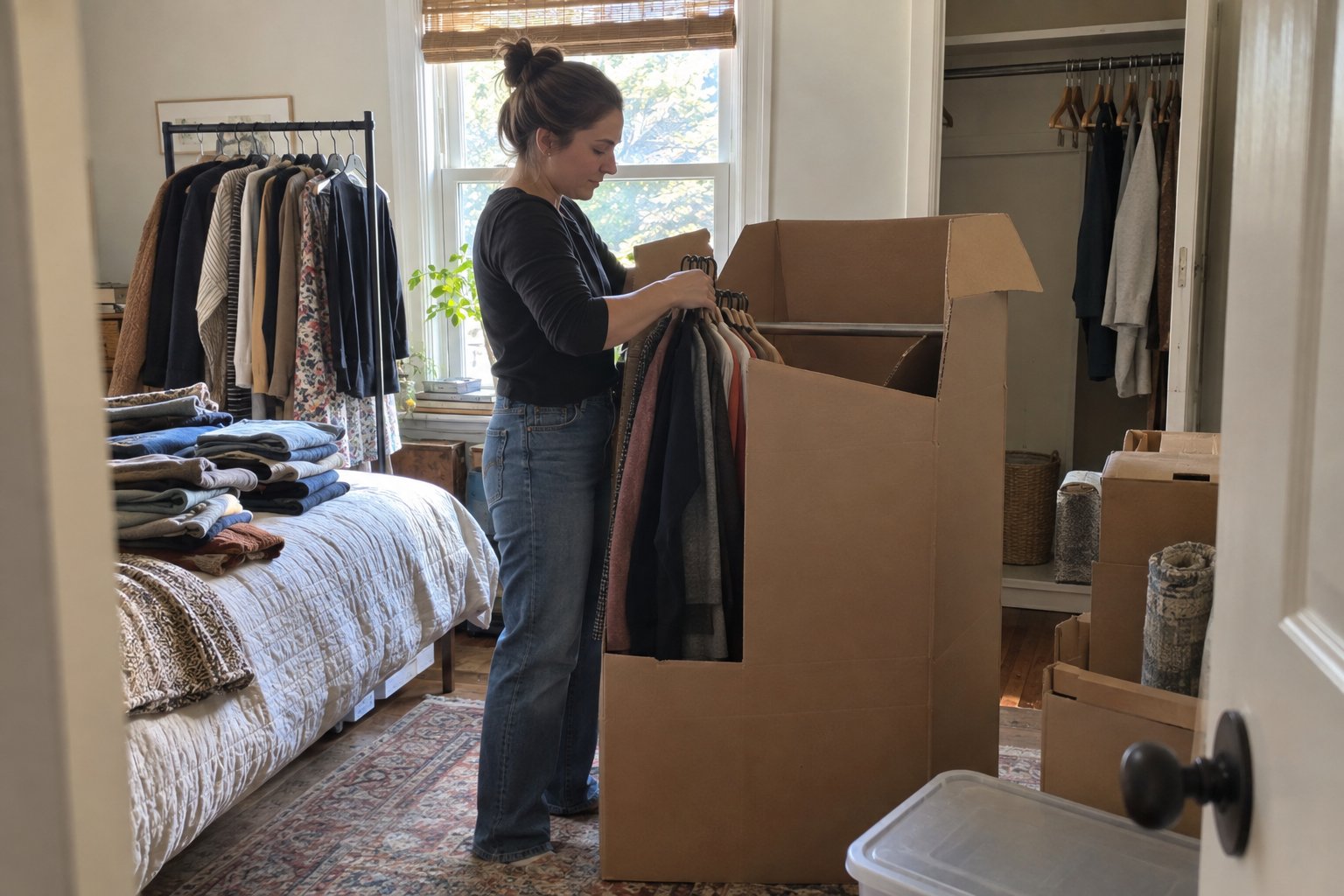
Packing clothes for moving goes wrong in one of two ways: people either dump everything loose into trash bags and spend the first week unpacking a wrinkled, musty mess, or they overpack boxes so heavy the bottoms give out on the stairs. Clothes are bulky, they shift during transport, and certain fabrics need very different handling than others. Get the method right room by room and your wardrobe arrives ready to hang up, not ready for the dry cleaner.
Sort clothes by how they travel best: hanging garments go in wardrobe boxes, folded everyday clothes go in medium boxes or suitcases, and off-season or delicate items get wrapped and cushioned separately. Sorting first keeps you from mixing a silk blouse in with winter boots, which is how fabric gets snagged or stained in transit.
Start with a quick purge. Moving is the easiest time to pull out anything that no longer fits or hasn't been worn in a year, since every item you donate is one less thing to lift, box, and unpack. Then work closet by closet instead of trying to pack your entire wardrobe in one sitting; it keeps similar items grouped and makes unpacking at the new place far faster.
Wardrobe boxes have a metal bar near the top so suits, dresses, and coats travel on their hangers and arrive without new creases. Transfer clothes directly from the closet rod to the box bar in small batches of 15 to 20 garments; overloading the bar bends it and crushes whatever is packed underneath. Heavier coats and structured jackets should go on the ends, with lighter garments in the middle where they have room to hang freely.
Suitcases are one of the most overlooked packing tools in a move: they're already built to protect clothes, they roll instead of needing to be carried, and using them means fewer boxes to buy. Fill them with folded clothes, shoes, and belts, and treat each one as a dedicated box you already own.
Roll rather than fold where possible. Rolled clothing resists wrinkling better than flat folding and lets you fit more into the same suitcase. Use the hard-sided shell for jeans, sweaters, and workout clothes, and reserve any soft-sided bags for lighter items since they offer less structure if something heavy gets stacked on top. Keep a capsule of essentials (a few days' worth of outfits plus toiletries) in one clearly labeled suitcase that travels with you in the car rather than the truck, so you're not digging through boxes the first night in a new home.
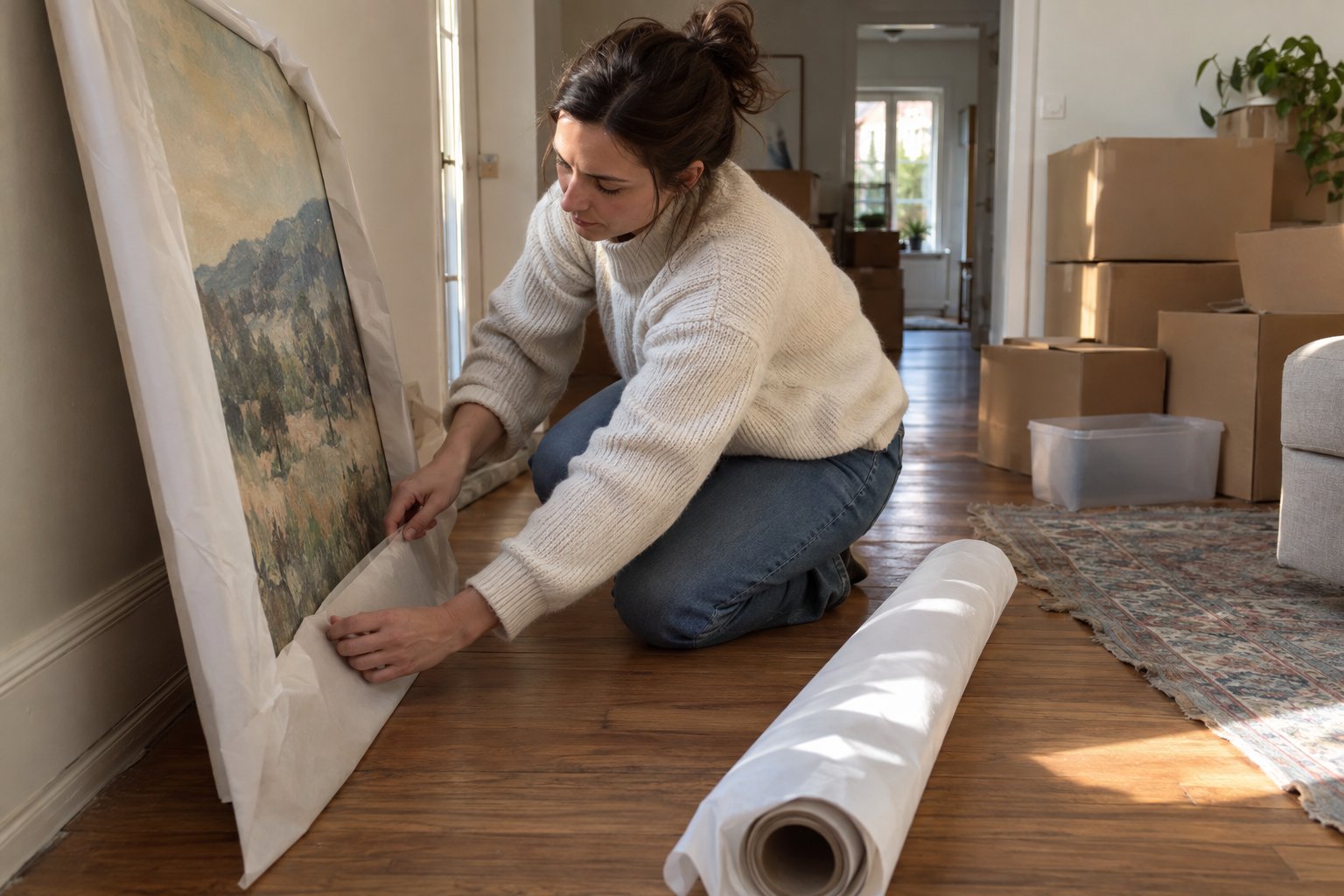
Delicate fabrics like silk, cashmere, and anything beaded or sequined need individual tissue paper wrapping and a dedicated box, since friction against other clothing during transport is what causes snags and pilling. Off-season items that won't be touched for months benefit from compression, since the goal there is saving space rather than quick access.
Shoes and accessories need their own packing logic because they're heavier and more rigid than fabric, and mixing them into clothing boxes risks crushing softer items underneath. Keep shoes in a separate box or in their original boxes when you have them, stuffed with socks or paper to help them hold their shape.
Belts can be coiled and placed inside hanging handbags to save space, and jewelry should never ride in a clothing box at all; pack it separately in a small, padded container you keep with you rather than on the truck. Hats hold their shape best stacked inside one another with a layer of tissue paper between each, placed in a box with enough room that nothing gets compressed on top of them.
Most single-person closets fill two to three wardrobe boxes plus three to four medium boxes of folded items; a family household typically needs a wardrobe box per closet and roughly one medium box per two dresser drawers. These numbers shift quickly with the size of the household, so it helps to do a quick inventory of closets and dresser drawers before you start buying supplies, rather than guessing and making a second trip to the store mid-pack.
If you'd rather not track down boxes, tape, and wardrobe cartons on your own, BC Brothers Moving stocks packing supplies sized for exactly this kind of job, and our packing services team can box up an entire closet in a fraction of the time it takes to do it alone. For anything particularly delicate, like vintage clothing or formalwear you don't want to risk, it's also worth reading our guide on how to pack dishes for moving for the same fragile-item wrapping principles applied to breakables.
When a move is happening fast, skip the folding altogether and use the "bag and tag" method: leave clothes on hangers, gather a garbage bag around them from the bottom up, and cinch it closed around the hanger hooks. It's not elegant, but it protects garments from dust and lets you unload a full closet into a car trunk in minutes.
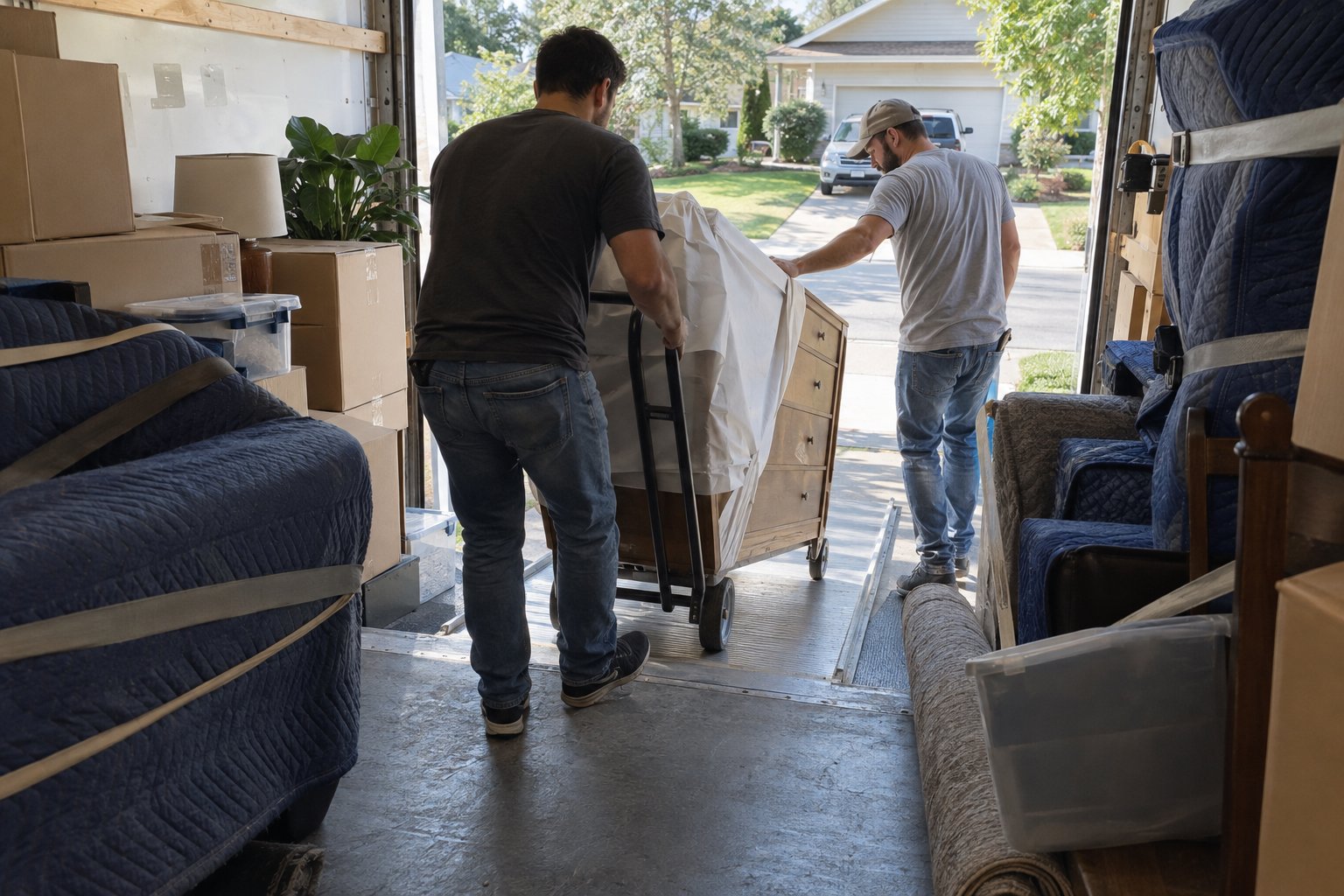
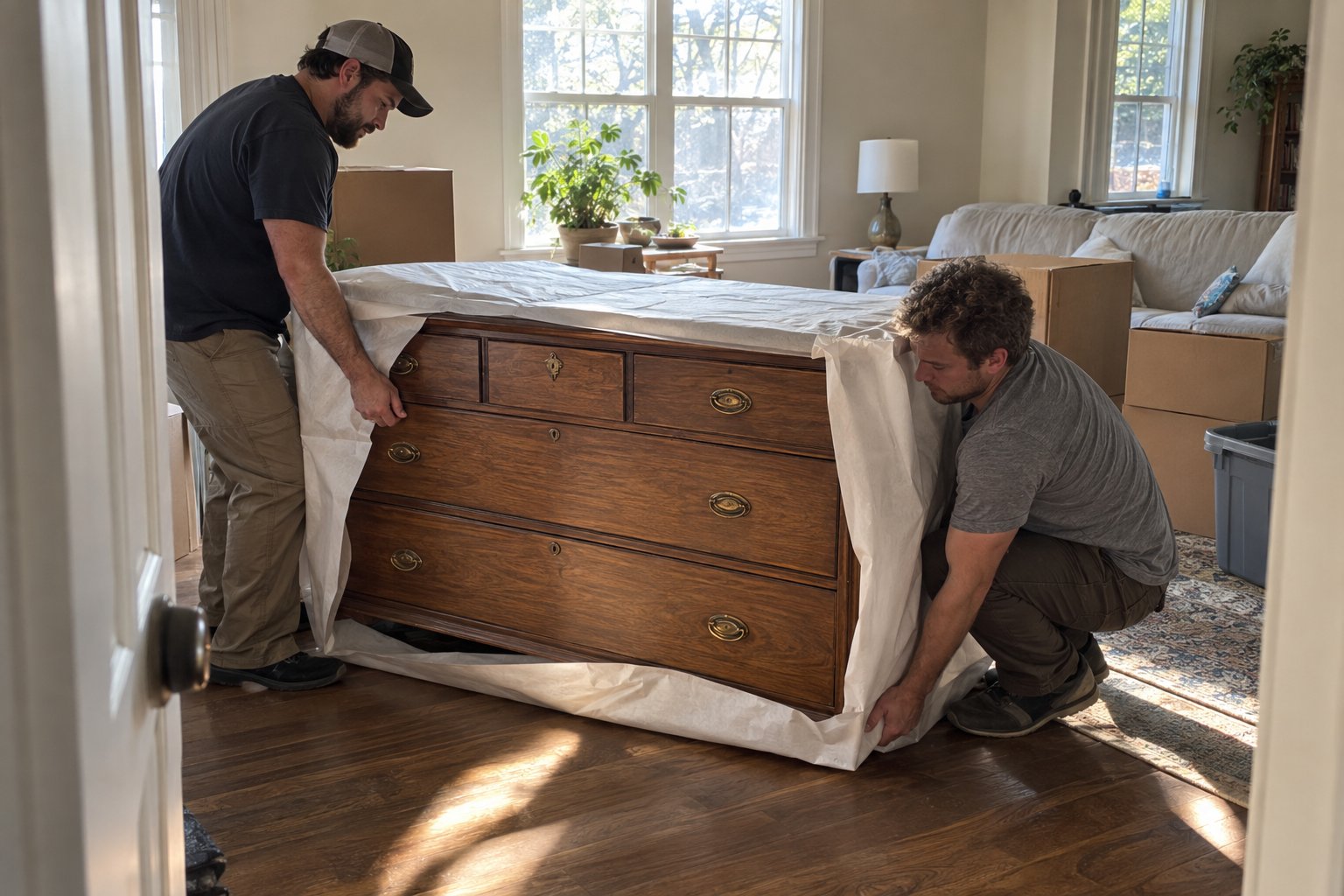
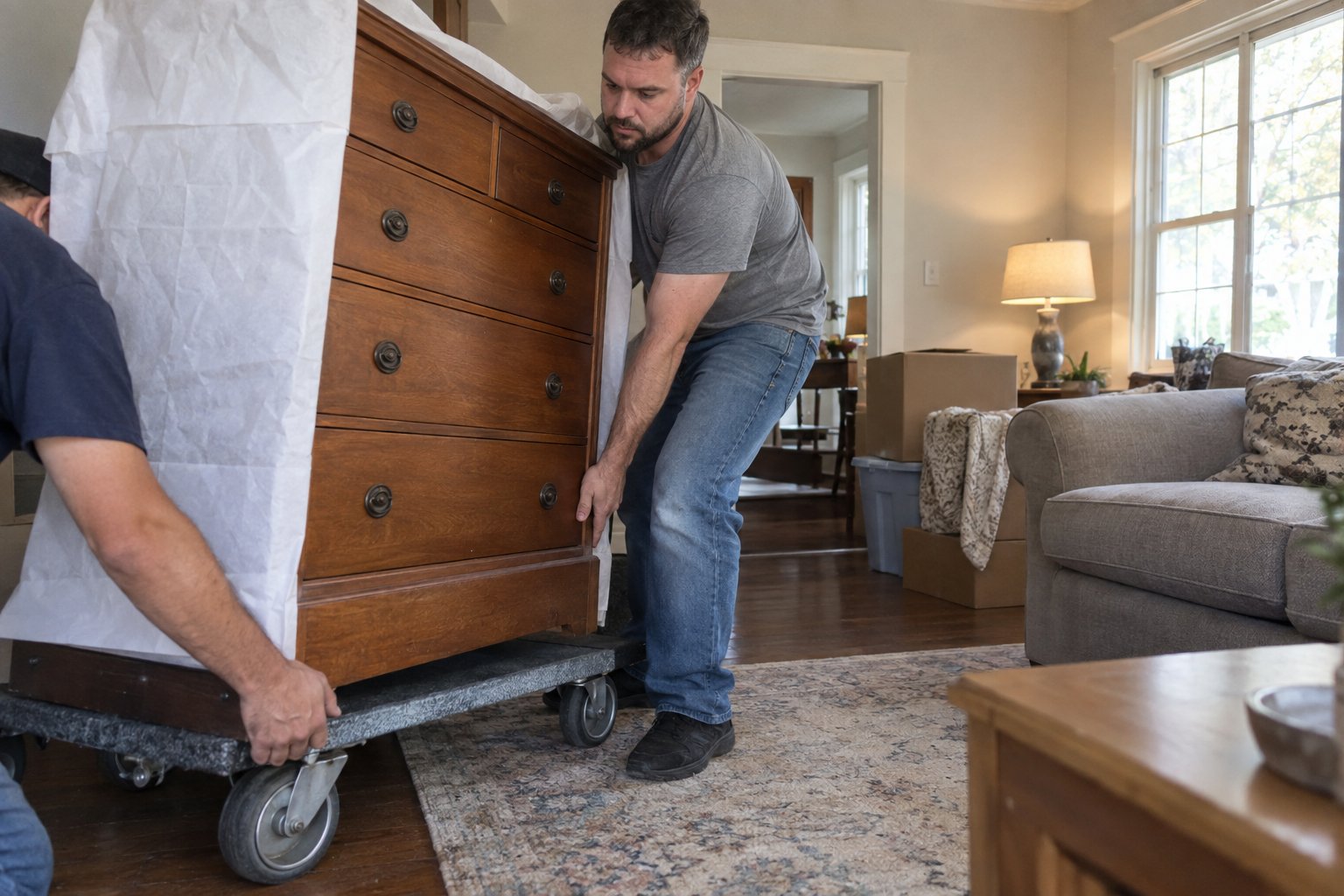
Dresser drawers can often be moved as-is. If the dresser itself is sturdy enough to lift with drawers in place, wrap the whole piece in plastic stretch wrap to keep drawers from sliding open, and you've eliminated an entire category of boxes. This only works for short local moves where the dresser won't be tipped on its side; for a long distance move, drawers should be emptied since the extra weight and shifting risk damaging the frame over a longer haul.
If the thought of boxing an entire household of clothing on top of everything else on your moving list feels unmanageable, professional packing is worth pricing out. A trained crew can wardrobe-box a closet, wrap delicates, and label everything for fast unpacking far quicker than most people manage solo, which frees up your moving week for the dozens of other things on a relocation checklist.
BC Brothers Moving offers packing support as part of our residential moving services in Savannah and the surrounding area, so you can hand off as much or as little of the process as you want. Reach out through our quote request page to get a sense of what full or partial packing support would look like for your move.
BC Brothers Moving & Storage is a locally owned, licensed and insured moving company rated 4.9 stars across 800+ reviews. Residential, commercial, long-distance, packing and storage — handled by one crew.
Movers in Savannah·Residential Moving·Packing Services·Long-Distance Moving·Storage

.svg)


.svg)
.svg)