Serving Savannah, GA & Austin TX


Mon - Sunday: 8am- 8pm


Movers can carry a washer and dryer out of the house, but in most cases they are not the ones who should disconnect the water lines, drain hose, or gas connection first. That part of the job usually falls to the homeowner or a licensed plumber, especially when a gas line is involved. Once the appliance is disconnected and reasonably dry, the crew can take over the carrying, wrapping, and loading.
Knowing where that line falls before moving day keeps the laundry room from becoming the one unplanned delay in an otherwise organized move. Here is what actually needs to happen, who should do it, and how to get the appliances ready before the truck shows up.
Moving crews are trained to lift, wrap, and transport heavy appliances safely, including maneuvering them through doorways and onto a dolly without damaging floors or walls. What they are generally not set up to do is plumbing or gas line work. Disconnecting the water supply hoses on a washer is simple enough that most homeowners can do it themselves, but a gas dryer line is a different story and often needs a professional or at least someone comfortable shutting off and capping a gas valve correctly.
Tell the crew ahead of time whether your dryer is gas or electric. A gas dryer that has not been disconnected and capped by the time the truck arrives will likely need to stay behind until that is handled, which can throw off the whole day's schedule.
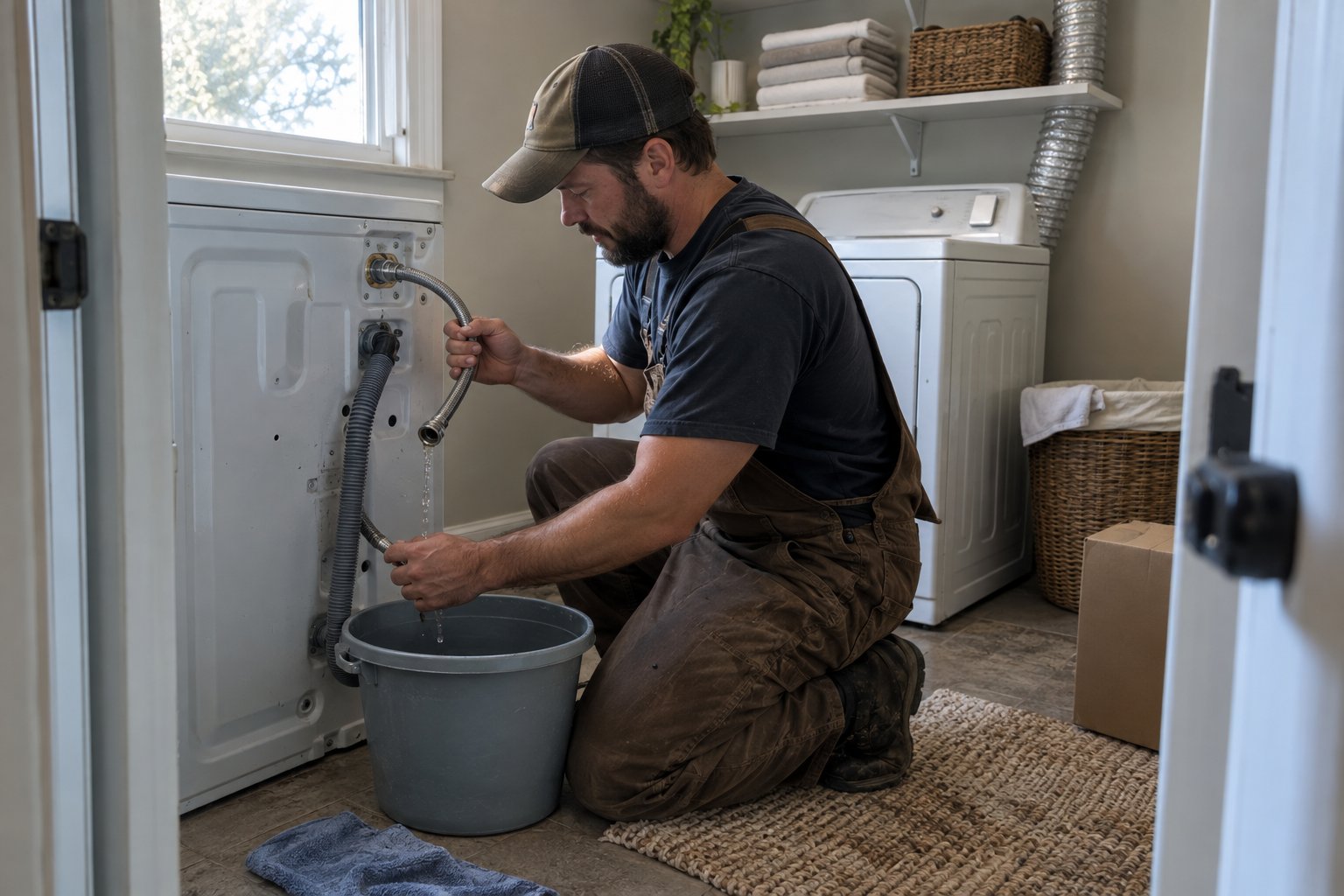
Yes, in most cases the homeowner handles this part. A washer's water supply lines use standard shut-off valves, usually found on the wall behind the machine. Turn both the hot and cold valves clockwise until they stop, then disconnect the hoses at the back of the washer over a towel or shallow pan since a small amount of water usually drains out.
Leave the hoses attached to the wall valves if you are not taking them with you, or coil and tape them to the washer if you are. Either way, let the crew know the water is off and the hoses are clear before they start lifting.
A dryer vent just needs to be disconnected from the wall duct, which takes a few seconds and no special training. A gas line is the part that deserves real caution. If your dryer runs on gas, shut off the valve at the wall and have the line properly capped before movers arrive, ideally by whoever installed it or a qualified technician.
Never leave a gas line loose or assume it will be handled on the spot. A common misconception is that movers are licensed to do this kind of work the same way they handle furniture. They are not, and asking a crew to disconnect a gas appliance puts everyone in an unsafe position. Treat the gas shutoff as a pre-move task, not a moving day task.
As a rule of thumb, budget about 20 to 30 minutes to disconnect a standard washer and dryer pair once the valves and vent are accessible. That is enough time to shut off water, drain hoses, disconnect the vent, and wipe down the drum so nothing leaks or drips during transport.
If a gas line is involved, add time for scheduling whoever is capping that line, since it may need to happen a day or more before the move rather than the morning of. Movers can usually tell you how firm their arrival window is, which helps you work backward to a disconnection deadline.
Beyond the disconnection itself, a few small steps make the appliances easier and safer to carry. Run the washer through a quick spin cycle beforehand if possible so excess water is gone, and prop the dryer door open for a day to let any lingering moisture air out. Tape down or remove any lint trap and accessory parts that could slide out during the move.
If either appliance has a manual that lists specific transport instructions, such as locking shipping bolts on a front-load washer's drum, follow those before the crew lifts it. These bolts keep the drum from swinging and damaging itself in transit, and not every washer has them, so check the manual rather than assuming.
Moving a washer and dryer is one part of a larger relocation, and the same prep logic applies to other major appliances in the home. Crews providing residential moving services can usually walk you through what needs to be ready for each major appliance during a pre-move walkthrough, which helps avoid surprises for either side on the actual moving day.
If your gas dryer line is old, corroded, or you are simply unsure how to shut it off safely, it is worth calling a licensed plumber or your gas utility rather than guessing. The same goes for washers with unusual plumbing setups, like a laundry pair on an upper floor with long supply runs or a stacked unit built into a closet.
For the appliances themselves, movers offering specialty moving services can handle the careful carrying and loading once disconnection is done, including navigating stairs or tight laundry closets without damaging the unit or the home around it. If you are not sure which category your situation falls into, ask before moving day rather than during it.
Once disconnected, washers and dryers travel best upright and strapped so they cannot tip or slide inside the truck. Furniture pads or moving blankets around the corners and control panel protect against scuffs, and keeping drain hoses and power cords coiled and taped to the appliance body keeps them from catching on doorframes.
If you are also sourcing wrapping materials, boxes, or tape for the rest of the house, ordering through packing supplies ahead of time means you are not scrambling for protective padding the morning the crew shows up.
A washer and dryer are two of the few items in a home that require a bit of advance coordination before a moving crew can touch them. Working out who handles the water valves, the vent, and especially the gas line a day or two ahead keeps the laundry room from becoming a bottleneck. Everything else, the lifting, wrapping, and careful transport, is squarely the crew's job once that prep is done.
Planning your move? Request a quote from BC Brothers Moving and Storage.
Most moving crews will not disconnect a gas line themselves, since that work usually requires a licensed plumber or technician. Have the gas line shut off and capped before the crew arrives so they can focus on carrying and loading the appliance.
Shut off both hot and cold valves, disconnect the hoses over a towel to catch residual water, then either coil and tape them to the washer or leave them attached to the wall if you are not taking them. Let the crew know the water is fully shut off.
Check the washer's manual first, since many front-load models have shipping bolts meant to lock the drum in place during transport. If your model has them and they are not installed, the drum can swing and cause damage on the way to the new home.
Handle the water and vent disconnection the morning of the move if your schedule allows, but any gas line work should be arranged a day or more ahead since it may need a licensed technician's availability rather than a same-morning fix.
Let them know whether your dryer is gas or electric, whether disconnection is already done, and if the unit is stacked or in a tight closet. That information helps the crew plan the right equipment and approach before they arrive.
BC Brothers Moving & Storage is a locally owned, licensed and insured moving company rated 4.9 stars across 800+ reviews. Residential, commercial, long-distance, packing and storage — handled by one crew.
Movers in Savannah·Residential Moving·Packing Services·Long-Distance Moving·Storage