Serving Savannah, GA & Austin TX


Mon - Sunday: 8am- 8pm


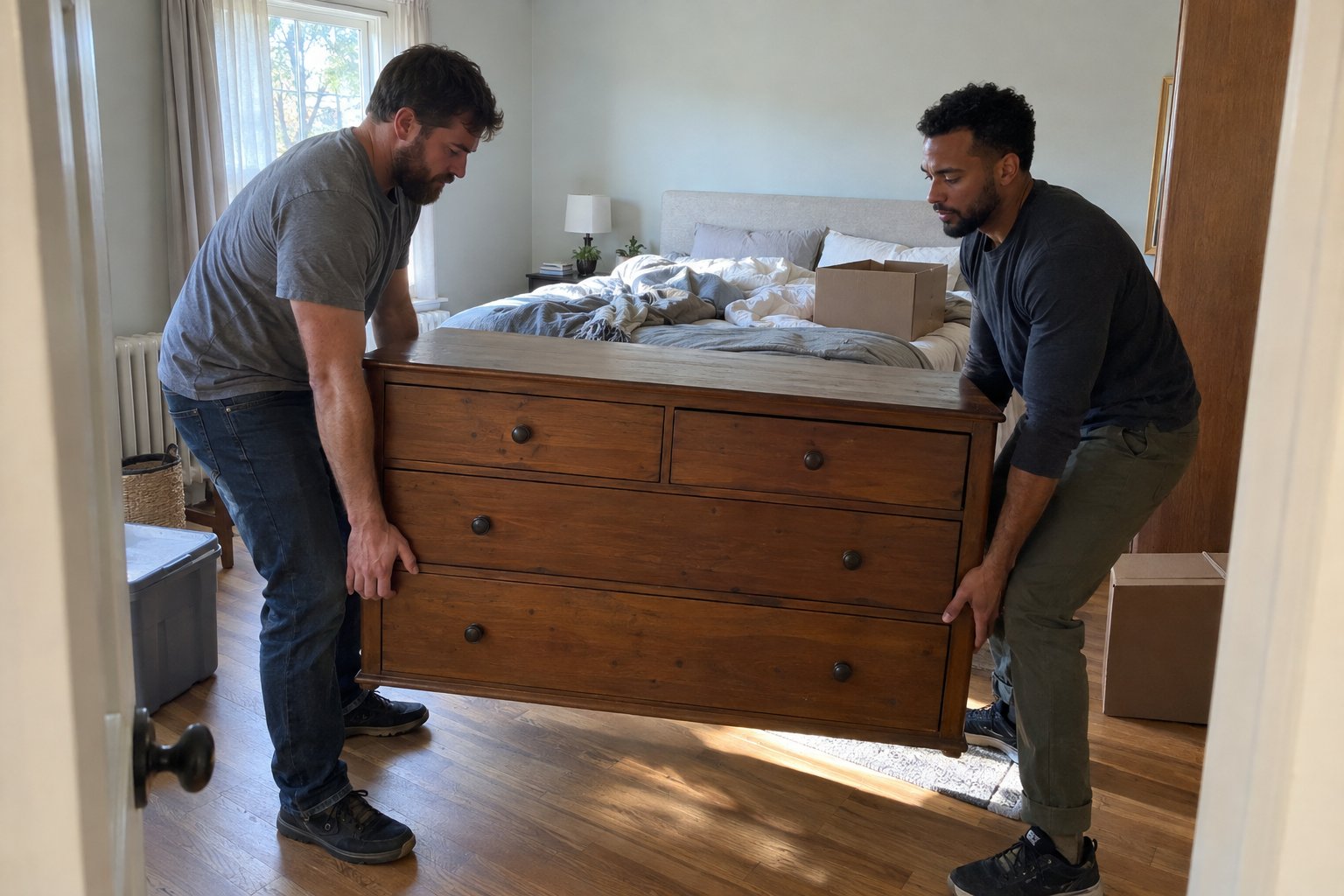
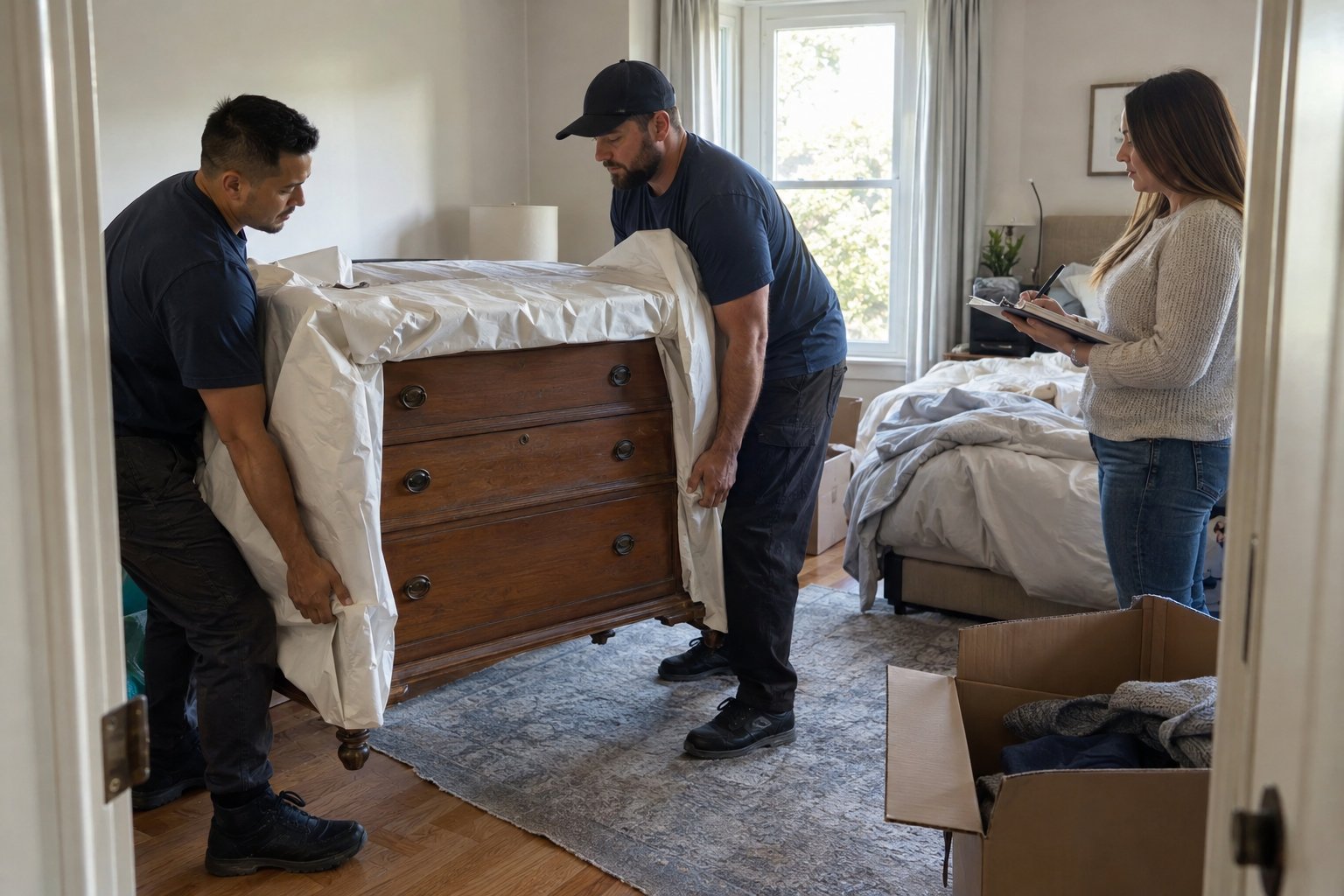
Yes, in most cases movers need advance notice for heavy furniture. Letting a crew know ahead of time about a large wardrobe, a solid wood dresser, or a bulky sectional lets the company plan the right number of people, the right equipment, and enough time in the schedule. Without that notice, a crew can still get the job done, but it often takes longer and raises the chance of someone getting hurt or a piece getting scuffed on the way out.
The short answer covers most situations, but the amount of notice that actually matters, and what counts as "heavy" in the first place, depends on a few things. Here's what changes the answer and how to make sure your crew shows up ready.
Anything that normally takes two or more people to lift safely, or anything so bulky it won't clear a standard doorway without maneuvering, falls into this category. Think solid wood armoires, china cabinets, large sectionals, upright pianos, big-screen TVs on heavy stands, and oversized dressers with stone or glass tops.
Weight alone isn't the only factor. A long dining table might not weigh much but is awkward to carry around a stair landing. A gun safe or a floor safe is heavy and dense in a way that changes how a crew lifts it. If you're unsure whether something qualifies, describe it to the company when you book rather than assuming it's routine.
Advance notice lets a moving company staff the job correctly and bring the right gear from the start, instead of adjusting mid-move. A crew that knows about a heavy piece ahead of time can bring furniture dolly straps, extra padding, and plan the lift sequence before the truck even arrives.
When a crew is told about a heavy item after they've already shown up with a smaller team, they're left improvising: pulling in an extra person late, rearranging the truck loading order, or spending more time figuring out angles through doorways. That's where delays and damage tend to happen, not because the crew isn't capable, but because the plan didn't match the job.
This is a common misconception. Experienced crews are good at adapting, but adapting isn't the same as being prepared. A crew can usually find a way to move a heavy item they weren't told about, but doing so without the right equipment or team size on hand increases the time the job takes and the risk of strain injuries or damage to the item, the floors, or the walls.
Treat your moving company's intake questions as a real planning tool, not paperwork. When they ask about heavy or bulky items during booking, a complete answer is what lets them send a crew sized for your actual move rather than an average one.
As a rule of thumb, let your moving company know about heavy or unusual furniture when you book, and confirm it again a few days before moving day if anything has changed. That gives the company time to adjust crew size or bring specialized equipment like furniture straps or a stair-climbing dolly if your home needs it.
If you book a move only a day or two out, mention heavy items the moment you schedule, since there's less room to adjust staffing later. For moves booked weeks in advance, a quick confirmation call the week of the move is enough to catch any last-minute additions, like a treadmill you decided to keep instead of sell.
Give your crew a short, specific list rather than a vague warning. "We have a few heavy things" doesn't help as much as "a solid wood armoire upstairs, a gun safe in the garage, and a sectional that may need the legs removed." The more concrete the list, the better the crew can plan the truck loading order and bring the right padding and straps.
It also helps to flag access issues at the same time: a narrow stairwell, a storage unit with a tight door, or limited parking near the entrance. If your Savannah, GA home has stairs or a tight driveway, mentioning that alongside your heavy items gives the crew the full picture before they arrive. For broader guidance on preparing your home and your crew for the day, see our moving day checklist, which covers the walkthrough steps that pair well with flagging heavy items in advance.
If you're working with a company for residential moving labor rather than a full-service move, this notice matters even more, since labor-only crews are often scheduled with equipment matched closely to the job description you provide.
Planning your move? Request a quote from BC Brothers Moving and Storage.
Most crews can still move it, but they may need to adjust on the spot, which can mean rearranging the loading plan or taking more time than scheduled. If you remember something the morning of the move, call your moving company as early as possible so they can see if extra help or equipment is available.
Rough dimensions help, especially for anything that might not clear a doorway or stairwell, but exact measurements aren't required. Describing the item, its approximate size, and its location in the home is usually enough for a crew to plan around it.
Yes. Short moves and in-building relocations still involve elevators, hallway turns, and tight corners that matter more for heavy pieces than light ones. Crews plan equipment and staffing the same way regardless of distance.
It's uncommon, but a crew may need to reschedule or bring in additional help if a heavy item shows up unannounced and the scheduled team can't safely handle it. Giving notice ahead of time avoids this situation entirely.
Yes, direction and stair count both affect planning. Moving a heavy piece down a flight of stairs involves different control and bracing than moving it up, so mention stairs at either address when you describe your heavy items.
BC Brothers Moving & Storage is a locally owned, licensed and insured moving company rated 4.9 stars across 800+ reviews. Residential, commercial, long-distance, packing and storage — handled by one crew.
Movers in Savannah·Residential Moving·Packing Services·Long-Distance Moving·Storage