Serving Savannah, GA & Austin TX

.png)
Mon - Sunday: 8am- 8pm

.svg)
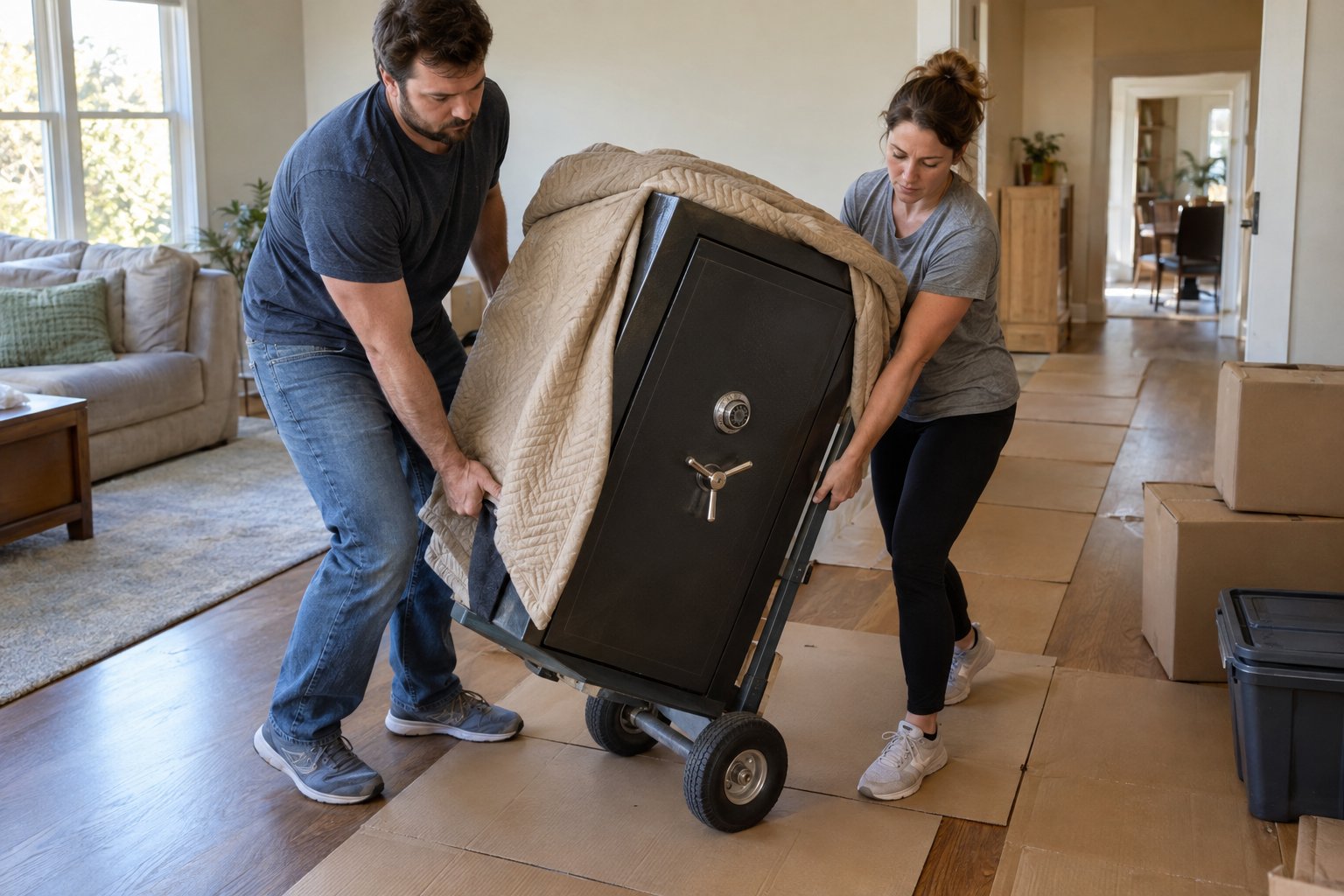
Transporting a safe comes down to controlling its weight before you ever try to move it, not muscling it across the room. Most home and gun safes weigh between 300 and 1,500 pounds, and even a small floor safe can crush a toe or crack tile if it shifts wrong. The right combination of equipment, a clear path, and a slow, deliberate technique is what gets a safe from one building to another without an injury or a repair bill.
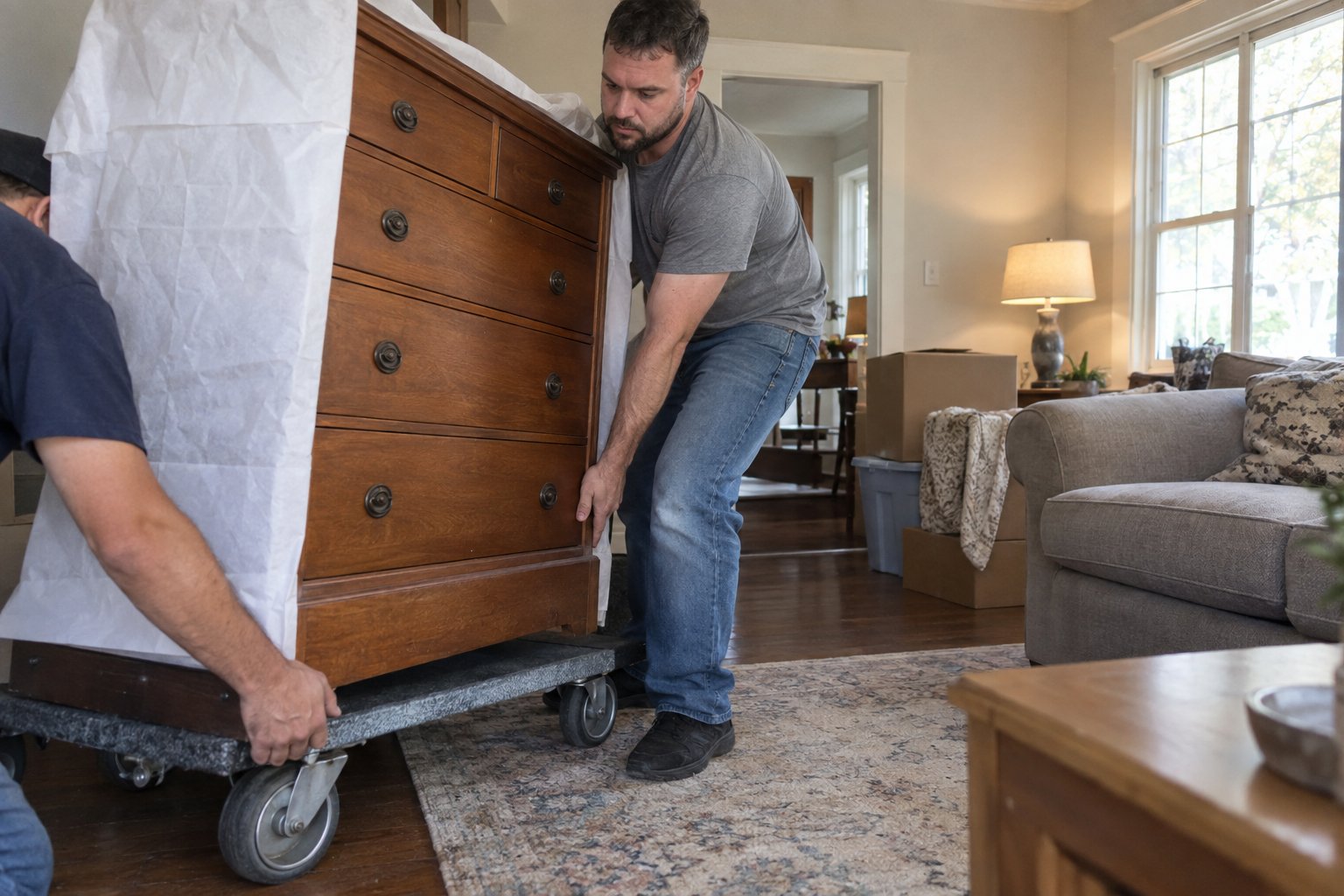
You move a heavy safe by shifting its weight onto equipment rated for the load, never onto your own back. A appliance dolly, safe-moving skids, or a hydraulic lift table lets two or three people control the safe's motion instead of fighting its mass directly.
Before anything gets lifted, confirm the safe's weight. Many manufacturers stamp the weight on the interior door or in the manual, and a kitchen scale under one corner at a time can give you a rough estimate if that information is missing. Anything over roughly 600 pounds should be treated as a two-to-four person job with mechanical assistance, not a job for a couple of friends and a hand truck.
A general rule in the moving industry is one person per 100 to 150 pounds of dead weight, plus one extra person to manage doorways, turns, and stairs. Trying to save money by moving a 900-pound gun safe with two people is one of the most common causes of dropped-safe injuries and floor damage we see.
A safe move typically requires a heavy-duty appliance dolly with a load capacity well above the safe's weight, moving straps or a ratchet strap system, furniture sliders or safe-moving pucks, and rigid moving blankets. For anything approaching or exceeding 1,000 pounds, a stair-climbing dolly or a hydraulic lift gate on the truck becomes necessary rather than optional.
Floor protection matters as much as the equipment doing the lifting, since a safe concentrates hundreds of pounds onto a few square inches of dolly wheel or puck. Hardwood, tile, and even concrete can chip or crack under sustained point pressure if you roll a safe across them without a protective path.
Lay down quarter-inch plywood sheets or dedicated floor runners along the entire route before you start moving anything. This spreads the load and gives the dolly wheels a smooth, predictable surface instead of grout lines or uneven boards. At every doorway, measure the safe's width and height against the frame first. If it is close, remove the door from its hinges rather than risk gouging both the safe and the trim trying to squeeze through.
Tight interior corners are where most floor damage happens, because the temptation is to pivot the dolly on one wheel. Instead, plan a three-point turn with a spotter watching the wall side, and keep the safe's weight centered over the dolly axle throughout the pivot.
The core technique for transporting a gun safe and a floor safe is similar, but the two have different failure points. A gun safe is tall, top-heavy, and prone to tipping if tilted more than a few degrees, while a floor safe is often bolted into a subfloor and needs to be unbolted and stabilized before it goes anywhere.
Gun safes should be moved upright whenever possible using a stair-climbing appliance dolly with a ratcheting strap around the widest point. If you must tilt it to clear a doorway, keep the tilt under 45 degrees and never let go of the strap tension. A small floor safe, by contrast, may be light enough to lift directly with two people once it is freed from the floor, but check for anchor bolts on the underside before attempting to pry it loose.
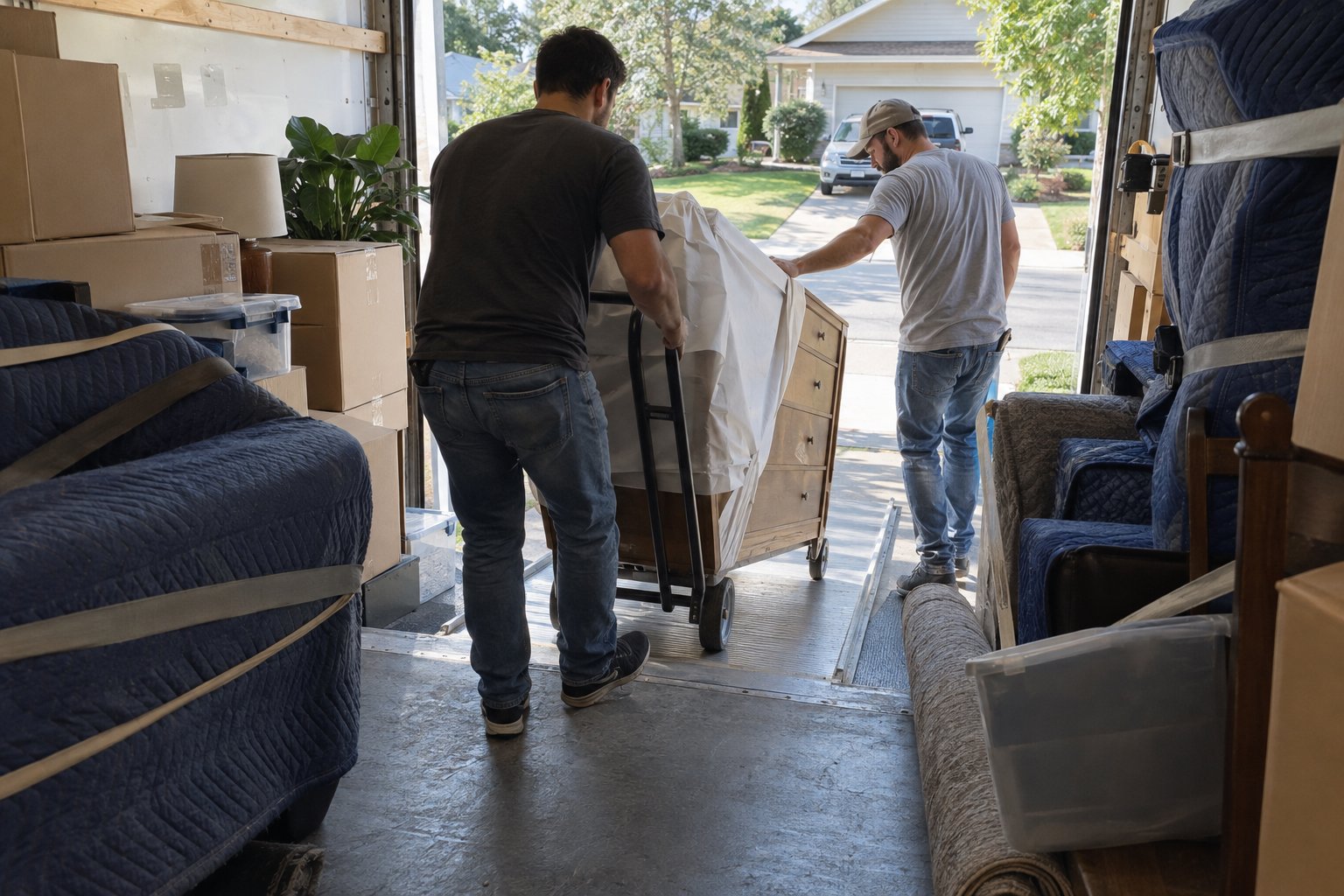
Getting a safe into the truck is usually the highest-risk step of the entire move, because you are transitioning from level ground to an incline. A hydraulic lift gate is the safest option, letting the safe ride up on a flat platform instead of being pushed up a ramp by hand.
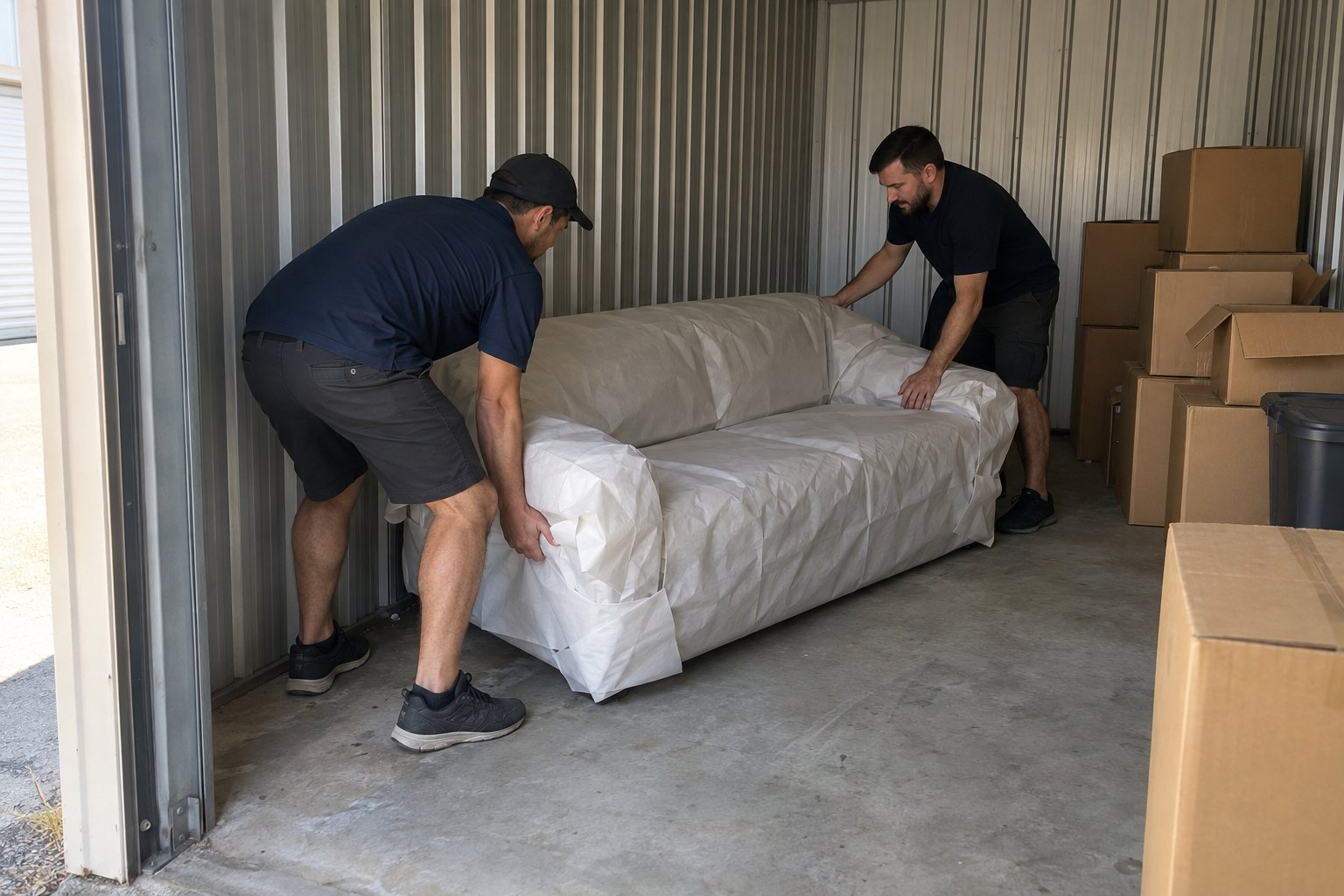
If a ramp is your only option, use a minimum 4-foot-wide ramp rated for at least twice the safe's weight, and never attempt to walk the safe up alone. Position one person at the top pulling with a strap, one or two at the bottom pushing and controlling the dolly, and a spotter watching for any lean. Once inside the truck, the safe should sit against the front wall, strapped to the truck's frame or wall anchors, with wheel chocks or wood blocks placed against the base to prevent rolling during transit.
Professional help makes sense any time a safe exceeds what two people can safely control, when the route includes stairs or tight turns, or when the safe needs to travel any real distance by vehicle. Renting equipment for a one-time move often costs nearly as much as hiring a crew that already owns it and knows how to use it.
If you are relocating a home that includes a gun safe, floor safe, or any similarly dense item, it is worth folding that into your broader moving plan rather than treating it as a separate errand. Our specialty moving services team handles safes alongside pianos, gun collections, and other awkward, heavy items as part of a full residential move. If your safe is heading to a new home in the Savannah area, request a moving quote and mention the safe's approximate weight so the crew can bring the right equipment on move day.
BC Brothers Moving & Storage is a locally owned, licensed and insured moving company rated 4.9 stars across 800+ reviews. Residential, commercial, long-distance, packing and storage — handled by one crew.
Movers in Savannah·Residential Moving·Packing Services·Long-Distance Moving·Storage

.svg)


.svg)
.svg)