Serving Savannah, GA & Austin TX

.png)
Mon - Sunday: 8am- 8pm

.svg)

Moving a storage shed comes down to picking the right method for its size and construction, then protecting both the structure and the ground it travels over. A small resin shed can sometimes be dragged on skids by a few people, but a wood-framed or metal shed over roughly 8x10 feet usually needs mechanical lifting equipment or partial disassembly to survive the trip intact. Here is how to decide which approach fits your shed, and how to get it to the new spot without cracking a wall panel or tearing up your lawn.
Yes, many sheds can be relocated whole if they are small enough and the distance is short. The key factors are weight, frame rigidity, and how far the shed needs to travel, not just its square footage.
Plastic and resin sheds under about 6x8 feet are the easiest candidates for a whole-structure move. They are light, have no rigid floor that can twist, and tolerate being tilted or dragged short distances. Wood-framed sheds hold together reasonably well over short hauls because the frame flexes as a unit, but they are heavy, often 500 to 1,500 pounds empty, and need more people or equipment. Metal sheds are the trickiest to move whole. Their panels are thin and can buckle or pop out of their tracks under uneven pressure, so most metal sheds longer than 10 feet do better partially disassembled.
The right transport method depends almost entirely on shed size and how far you are moving it. Short on-property relocations usually call for skids or rollers, while moving a shed to a different property almost always requires a trailer and lifting equipment.
For moves within the same yard, sliding the shed on greased skids (typically 4x4 lumber) or steel pipe rollers is the traditional low-tech option. You lift one side at a time with a hydraulic jack or pry bar, work the skids underneath, then pull the shed with a come-along, chain, or tow strap attached to a vehicle. This works well on flat, firm ground but struggles on slopes, soft soil, or over obstacles like tree roots and fences.
If you have access to a forklift, skid steer with forks, or a boom truck, the shed can be lifted directly onto a trailer bed rather than dragged. This reduces stress on the floor joints and is faster for sheds in the 8x10 to 12x16 range. The shed needs to be strapped to the forks or a lifting frame so it does not shift or tip during the lift.
Specialized shed movers use hydraulic dolly systems or tilt-bed trailers built to slide under a shed and cradle it during transport. This is generally the safest option for sheds over 200 square feet or for moves of more than a few miles, since it avoids repeated lifting and keeps the structure level the whole time.
Both the origin and destination sites need to be graded, cleared, and measured before moving day, not the morning of. Skipping this step is the most common reason a shed move stalls halfway or ends with a structure that will not sit flush on its new foundation.
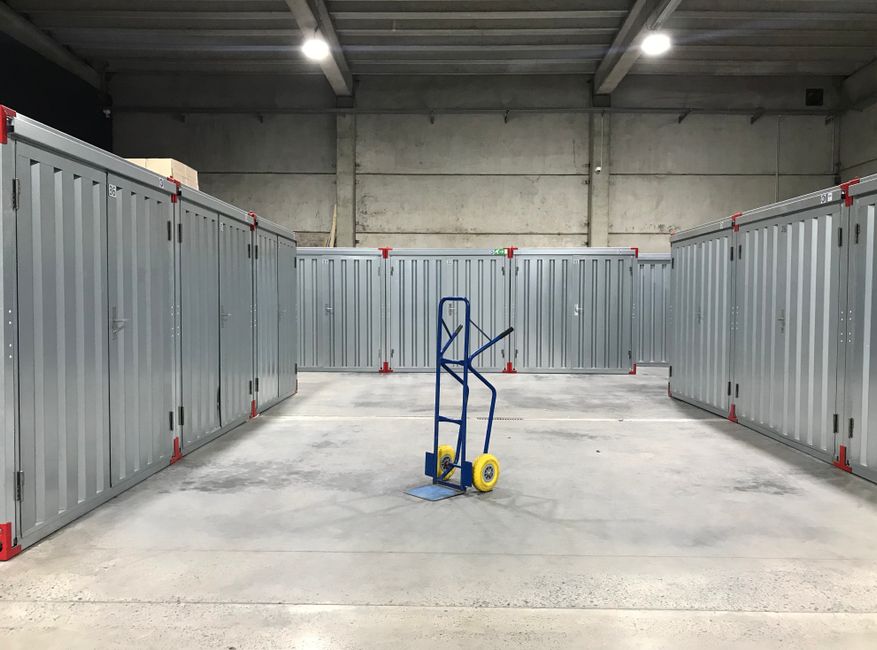
If you are clearing out a shed's contents ahead of a move and do not yet have a home for everything, a climate-controlled storage unit can hold garden equipment, seasonal decor, or tools while the structure itself is in transit, so nothing has to sit outside exposed to weather during the move window.
Disassembly is usually the better call when the shed is large, aging, or has to travel a long distance or through a tight access point like a narrow gate or side yard. Rebuilding on the other end takes longer, but it avoids the risk of a whole structure cracking, racking out of square, or simply not fitting through the available path.
Wood sheds with plywood siding can often be separated into wall panels if they were built panelized, which many kit sheds are. Metal sheds usually disassemble into roof panels, wall panels, and a frame, all held with sheet metal screws that back out easily. In both cases, label each panel and its hardware as you go so reassembly does not turn into a guessing game. A shed with a built-in floor deck is harder to disassemble cleanly and is often better served by lifting the whole structure instead.
For anything larger than a small plastic storage box, professional help is usually worth it once you weigh the cost of a rental truck, lifting equipment, and the risk of injury or structural damage against a service quote. A shed that shifts off its skids or drops off a lift can injure someone or turn into a full rebuild.
If the shed move is happening alongside a full household relocation, it often makes sense to fold it into the same job rather than hiring a separate specialist. Crews experienced with heavy or awkward items can bring the right straps, dollies, and lifting gear in one trip, and a company offering specialty moving services will typically have already handled sheds, storage buildings, and similar outbuildings alongside the usual household inventory. It is worth asking during your walkthrough or when you get a moving quote whether the shed can be included in the same visit.
Long-distance shed moves almost always require disassembly, since towing an assembled structure any real distance on public roads raises legal and safety issues around width, height, and securement. Panels or frame sections get wrapped, padded, and loaded like oversized furniture rather than towed as a unit.
If the shed is moving to a new home in another city or state as part of a larger relocation, coordinate its packing and loading with the rest of your household goods rather than treating it as a separate shipment. A crew familiar with long distance moving services can plan pad-wrapping and load order for oversized panels alongside your regular furniture, which keeps everything on one bill of lading and one delivery date instead of juggling two separate trips.
BC Brothers Moving & Storage is a locally owned, licensed and insured moving company rated 4.9 stars across 800+ reviews. Residential, commercial, long-distance, packing and storage — handled by one crew.
Movers in Savannah·Residential Moving·Packing Services·Long-Distance Moving·Storage

.svg)






.svg)
.svg)