Serving Savannah, GA & Austin TX

.png)
Mon - Sunday: 8am- 8pm

.svg)
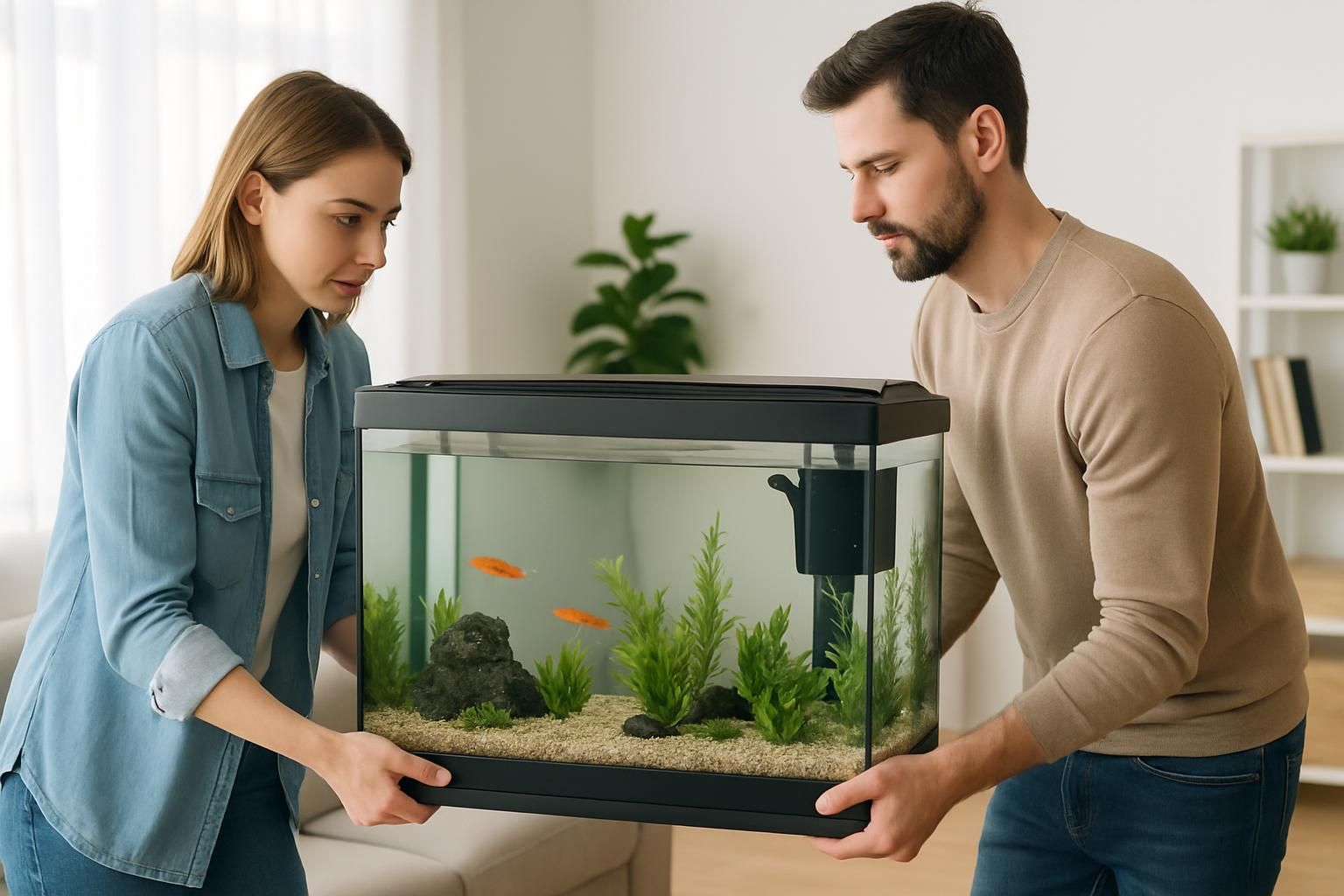
Moving a fish tank safely means breaking the move into three separate jobs: relocating the fish themselves, preserving as much of the established tank water and bacteria as possible, and transporting the glass or acrylic tank without cracking it. Try to move a fish tank as one unit, water and all, and you risk a cracked seam, a dead colony of beneficial bacteria, and fish that do not survive the ride. Treat it as three jobs done in the right order and most home aquariums, even large ones, can make it through a local or long-distance move intact.
This is one of those moves people underestimate until they are standing over a 55-gallon tank with a moving truck outside. Here is how to actually do it, from the days before the move through getting the tank running again in your new home.
No, not for anything beyond a few feet on the same level. Water is heavy (about 8.3 pounds per gallon), and its shifting weight puts uneven stress on the seams and frame of a tank that was never designed to be moved while full. Even a short car ride can flex the glass enough to start a leak that will not show up until days later.
The only exception is sliding a small tank a short distance across a flat, level surface in the same room. Anything going into a vehicle, up or down stairs, or across town needs to be drained first.
Fish should travel in individual sealed bags or sturdy, lidded containers filled mostly with their existing tank water, not fresh water, so they are not shocked by a sudden change in chemistry. Keep the bags in an insulated cooler or box to buffer temperature swings during transport.
Stop feeding fish for 24 hours before the move. This reduces waste production in the bag, which keeps ammonia levels down during transit. Bag each fish with about a third water to two-thirds air, seal tightly with rubber bands, and cushion the bags inside a cooler so they cannot bang around. For a long-distance move, or if you are using long distance moving services and the fish will be in transit for many hours, ask your vet or aquarium supplier about oxygen-filled bags rather than standard air, since a full day in a sealed bag needs more dissolved oxygen than a short local trip.
Yes, saving as much of the original tank water as you reasonably can is one of the most important steps, because that water carries the beneficial bacteria your filter has spent weeks or months establishing. Losing that colony entirely means starting the nitrogen cycle over in the new tank, which stresses fish far more than the move itself.
Siphon the water into clean, food-grade buckets with tight lids, filling them no more than three-quarters full to prevent spills. Keep the filter media (sponges, cartridges, bio-rings) wet by placing it in a bag with some of this same tank water rather than letting it dry out; a dried-out filter loses most of its bacterial colony within a few hours. Label buckets clearly so movers know they hold aquarium water and not general cleaning supplies.
Once drained, the tank itself needs to travel upright, cushioned, and unloaded of anything that could shift and crack the glass. Never lay a glass tank on its side or stack anything on top of it during transport.
If you are already renting supplies for the rest of the house, grabbing extra packing paper to line boxes of decorations and gravel keeps small, sharp-edged pieces from rattling and chipping the tank walls if they end up packed nearby.
Set the tank up in its new spot before you release the fish back into it, and add the saved water back first so the environment is as close to what the fish left as possible. Rushing this step is the most common reason fish do not survive an otherwise well-planned aquarium move.
For small tanks under 20 gallons, most people can manage the process solo with some planning. For larger setups, reef tanks, or anything moving a long distance, professional help reduces the risk of a cracked tank or a lost bacterial colony considerably. If you are already booking a full household move, mentioning the aquarium ahead of time lets your residential moving services team plan the right vehicle positioning and timing so the tank is one of the last things loaded and first things unloaded, minimizing how long fish spend in transit.
Whatever size tank you have, the same principle holds: separate the fish, the water, and the glass into three planned steps instead of trying to move the whole aquarium as one fragile unit.
BC Brothers Moving & Storage is a locally owned, licensed and insured moving company rated 4.9 stars across 800+ reviews. Residential, commercial, long-distance, packing and storage — handled by one crew.
Movers in Savannah·Residential Moving·Packing Services·Long-Distance Moving·Storage

.svg)





.svg)
.svg)