Serving Savannah, GA & Austin TX

.png)
Mon - Sunday: 8am- 8pm

.svg)
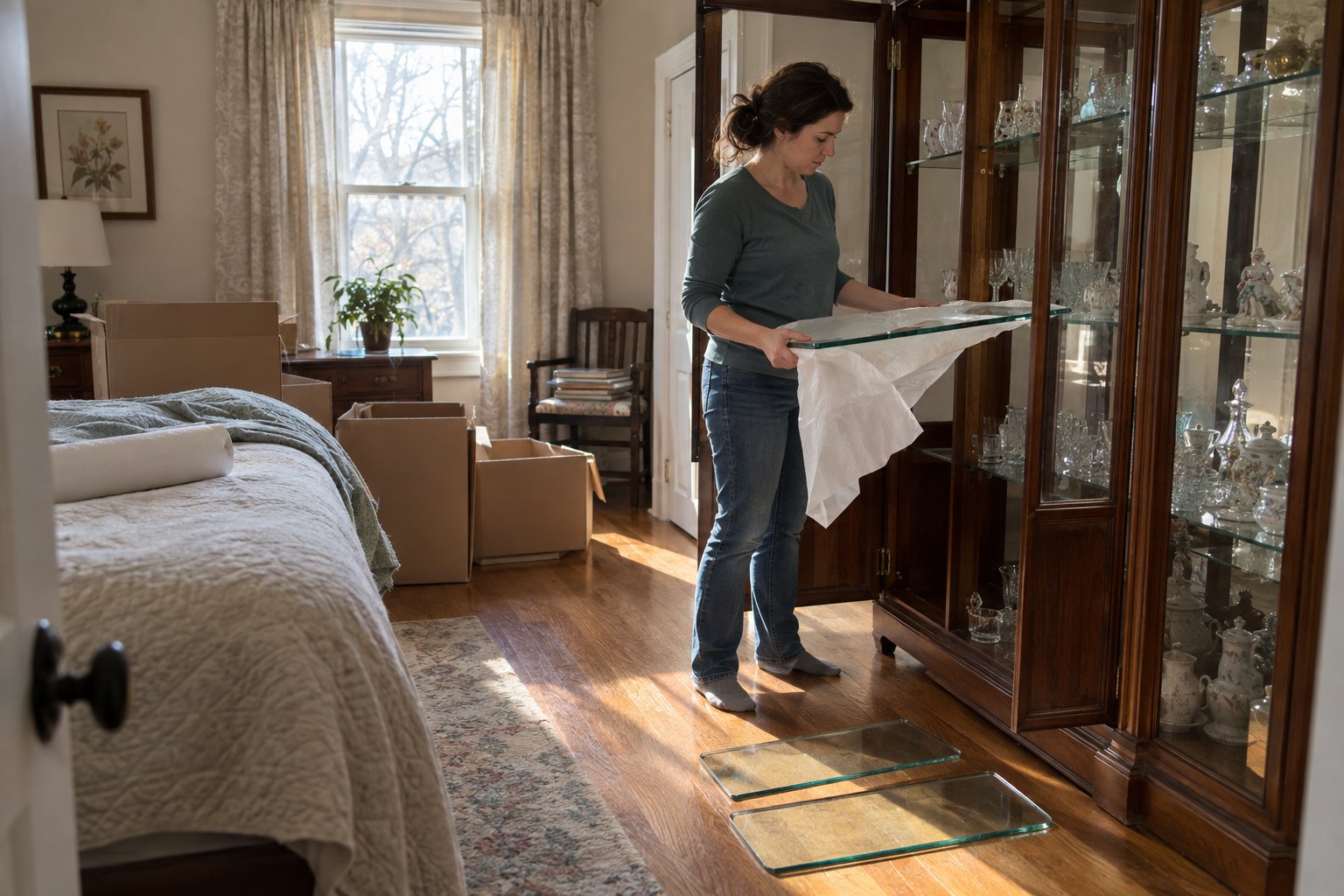
Moving a china cabinet safely means removing every loose piece first: glass doors, glass shelves, and any detachable hutch top. Once the cabinet is stripped down to its frame, wrap it as a solid piece of furniture and move it upright on a dolly, never on its back or side. The cabinet itself usually survives a move just fine. It's the glass, the fragile shelf pins, and the top-heavy balance that cause the damage.
China cabinets and curio cabinets sit in a strange middle ground for movers: they're furniture, but they're also basically a glass display case balanced on legs. We handle a lot of these in Savannah homes, from tall two-piece hutches to narrow corner curios, and almost every damage claim we've seen traces back to skipping the disassembly step or laying the piece down flat. Here's how to do it right.
The short answer: take the glass out before you take the cabinet anywhere. Glass doors and glass shelves should never travel while still installed, even if they're taped. Vibration and shifting weight during transport put stress on glass that tape alone cannot absorb.
Start by opening both doors and locating the hinge pins or screws. Most curio cabinet doors lift straight off their hinges once you tilt them slightly; others require a screwdriver. Set each door on a padded, flat surface immediately, never leaning against a wall where it can slide and shatter. Wrap each glass door in packing paper first, then a layer of bubble wrap, then a moving blanket, and tape the blanket snugly without taping directly to the glass surface.
Glass shelves usually rest on small pins or clips inside the cabinet. Lift each shelf straight up and out rather than sliding it, since sliding puts uneven pressure on the edges where chips start. Wrap each shelf individually in packing paper, then stand them on edge (never flat, and never stacked) inside a dish pack box with cardboard dividers between them. A dedicated dish pack box, meant for stemware and plates, has thicker walls than a standard box and holds up better under the weight of glass shelving.
Most china cabinets don't need to be fully disassembled, but any cabinet that separates into a top hutch and a bottom base should be split at that seam. Trying to move a two-piece cabinet as one unit doubles the weight, makes it harder to balance, and puts unnecessary strain on the joint where the two halves connect.
If your cabinet has a separate hutch top, remove any screws or brackets holding it to the base, and have a second person support the top piece as it lifts free. Set it down on a moving blanket immediately. Keep the hardware in a labeled bag taped to the inside of the cabinet base so it doesn't get lost between now and reassembly.
Legs, feet, and interior drawers usually stay in place. Removing drawers isn't necessary unless they're loaded with items, in which case empty them first so nothing shifts and cracks a drawer front during transport. Wrap drawer fronts with a furniture pad if they have decorative glass or mirrored inlays.
Once the doors, shelves, and any separable top are removed, wrap the remaining cabinet frame like any large furniture piece: packing paper or stretch wrap on any exposed wood veneer, then moving blankets secured with tape or stretch wrap, paying extra attention to corners and any decorative molding that sticks out. Wood trim and carved detailing chip easily if left unpadded.
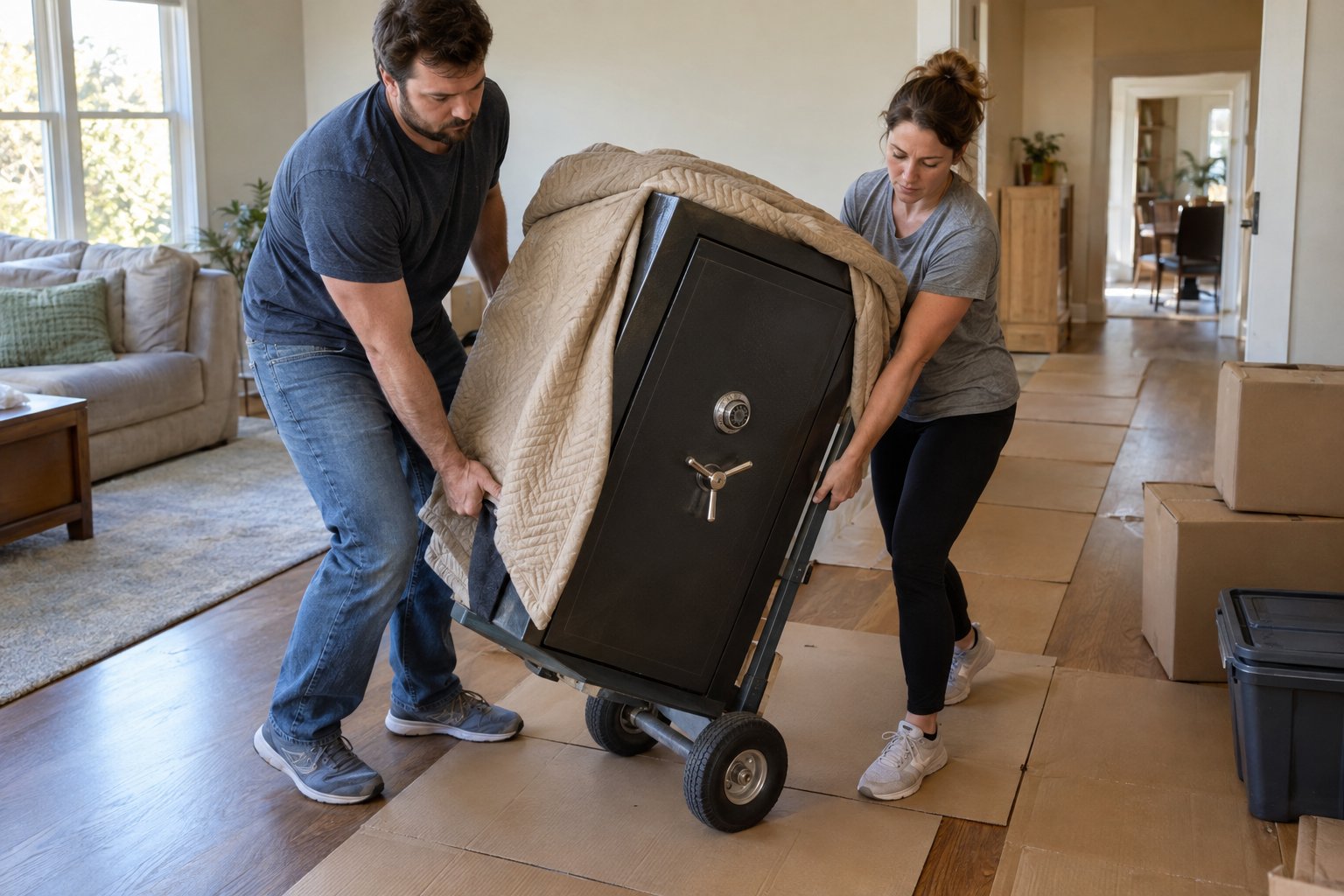
Empty cabinets are lighter than they look but remain awkward and top-heavy, especially tall curio pieces. Two people should carry or tilt the cabinet onto a furniture dolly rather than lifting it by hand for any distance. Strap the cabinet to the dolly before moving it, and keep it upright the entire time. Laying a china cabinet on its back to save space in a truck is one of the most common causes of frame damage and cracked interior glass.
Load the cabinet upright, positioned against the truck's side wall where it can be strapped in place, and never underneath boxes or other furniture. Keep the wrapped glass doors and shelf boxes in a separate, clearly labeled area so they don't get crushed by heavier items stacked later in the load.
For a single lightweight cabinet with no glass, a DIY move with a helper and a dolly is usually manageable. Once glass doors, glass shelves, or a two-piece hutch are involved, professional help earns its cost quickly: it takes the right combination of dollies, straps, and an extra set of trained hands to move a top-heavy glass cabinet down a hallway or a flight of stairs without an accident.
If your move includes other fragile or awkward pieces, a full residential moving service can handle the china cabinet alongside everything else in the house, which is often simpler than trying to coordinate a specialty item separately. Movers experienced with fragile antiques and glass furniture will also know how to pack around the cabinet in the truck so it isn't the first thing loaded or the last thing braced.
If you'd rather handle the packing yourself but want the cabinet loaded and hauled by professionals, our residential moving labor services cover just the heavy lifting and truck loading, which is often enough to protect a piece like this without booking a full-service move.
A short supply list covers most china cabinet moves: packing paper for wrapping glass, bubble wrap for extra cushioning on doors and shelf edges, moving blankets for the cabinet frame, a dish pack box for shelves, and a furniture dolly with straps for transport. A screwdriver set handles hinge pins and any hutch-to-base hardware.
Stock up on packing supplies before moving day so you're not scrambling for a second box of bubble wrap halfway through disassembly. Having enough padding on hand is usually the difference between a cabinet that arrives intact and one that needs a repair.
Ready to get help with the rest of the move? Get a moving quote from BC Brothers Moving and we'll walk you through what your china cabinet, and everything else in the house, will need on moving day.
BC Brothers Moving & Storage is a locally owned, licensed and insured moving company rated 4.9 stars across 800+ reviews. Residential, commercial, long-distance, packing and storage — handled by one crew.
Movers in Savannah·Residential Moving·Packing Services·Long-Distance Moving·Storage

.svg)






.svg)
.svg)