Serving Savannah, GA & Austin TX

.png)
Mon - Sunday: 8am- 8pm

.svg)
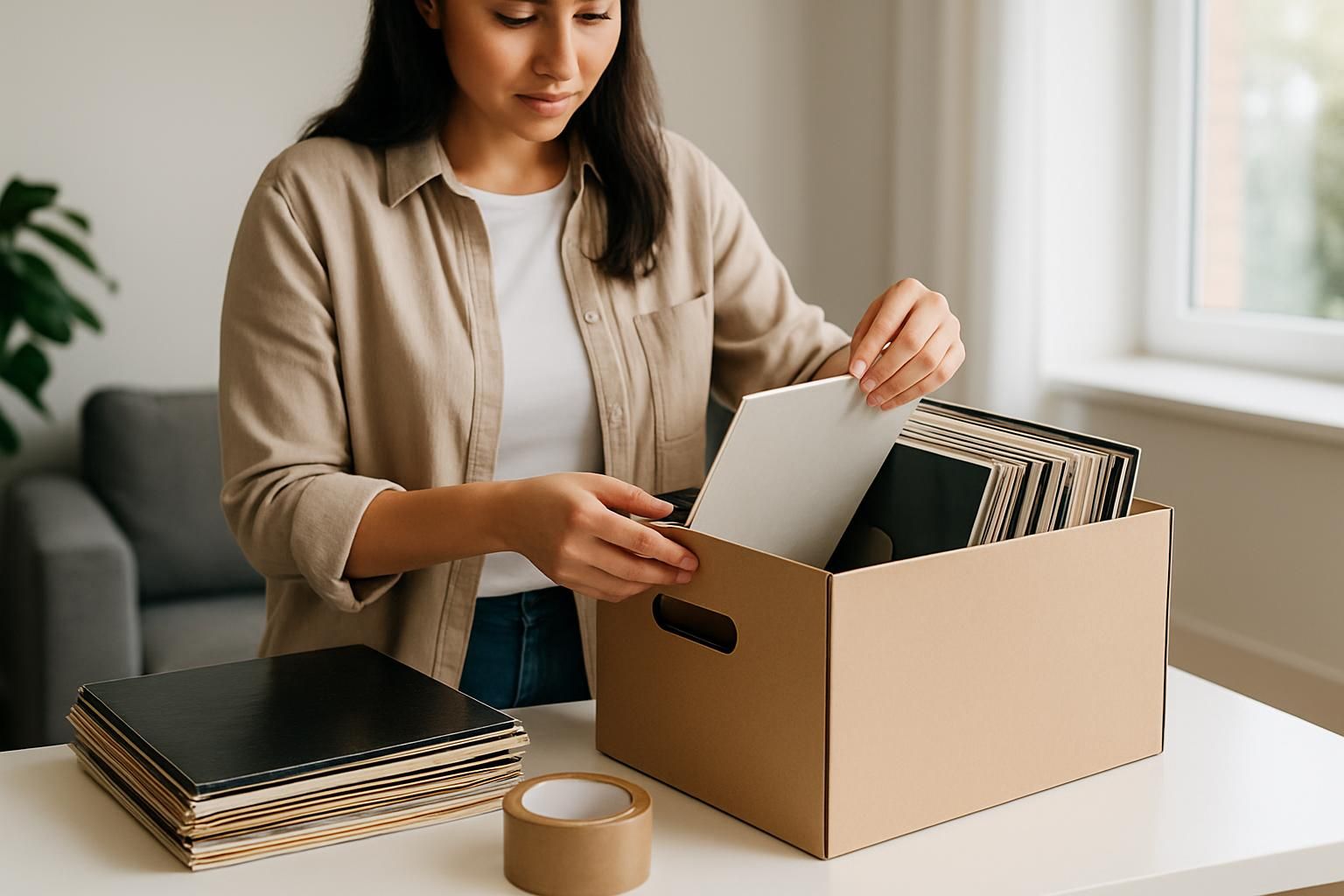
Packing records for storage is different from packing them for a move across town. A record that sits in a box for one afternoon can handle a little heat or a slight tilt. A record that sits in the same box for six months cannot. If you are putting a collection into a storage unit, whether during a move, a renovation, or simply because you have run out of shelf space, the goal shifts from "get it there safely" to "keep it playable for the long haul." That means paying attention to temperature, humidity, box orientation, and how the unit itself is set up, not just how each sleeve is wrapped.
Vinyl is a petroleum-based product, and it softens at temperatures most people would consider a warm afternoon, well below what a parked storage unit can reach in Savannah's summer. Warping, sleeve mold, and label damage are almost always storage-condition problems, not packing-technique problems. Here is what actually protects a collection sitting in storage for weeks, months, or years.
Pack records vertically in sturdy, snug boxes, with each record in a poly-lined inner sleeve and a protected outer jacket, and store the boxes off the concrete floor in a climate-controlled space. The packing method matters less than the environment you put the boxes into, so treat both as equally important steps.
Start with inner sleeves. Original paper inner sleeves generate static and can scuff vinyl over time; poly-lined or rice-paper sleeves protect better for extended storage. Slide the sleeved record back into its cardboard jacket, then group jackets by size so nothing overhangs the edge of a box and gets crushed.
Skip standard moving boxes for this job. A box that flexes under weight lets records lean, and a leaning stack is how warping starts. Use a box sized specifically for records, or a heavy-duty box reinforced at the seams, so the walls stay rigid even after months of stacking.
Records should stand vertically, like books on a shelf, never flat and never stacked horizontally in a tall pile. A box that is slightly underfilled lets records lean and warp; a box that is overstuffed puts pressure on the outer covers and can crack spines. Fill each box until the records are snug enough to stand upright on their own, then add a folded piece of cardboard or foam at the end for a firm finish.
Vinyl needs a stable, moderate temperature, ideally kept below the mid-70s Fahrenheit, and low humidity to avoid both warping and sleeve mold. A non-climate-controlled unit that swings from cold mornings to hot afternoons is one of the fastest ways to ruin a collection, even if every record was packed perfectly.
This is the detail most people underestimate. A drive-up storage unit without climate control can reach temperatures well above what vinyl can tolerate during a Savannah summer, and that heat builds up regardless of how well the boxes are packed inside. If you are storing records for more than a few weeks, a climate-controlled unit is worth the extra cost. It is the single biggest factor in whether a collection survives storage intact.
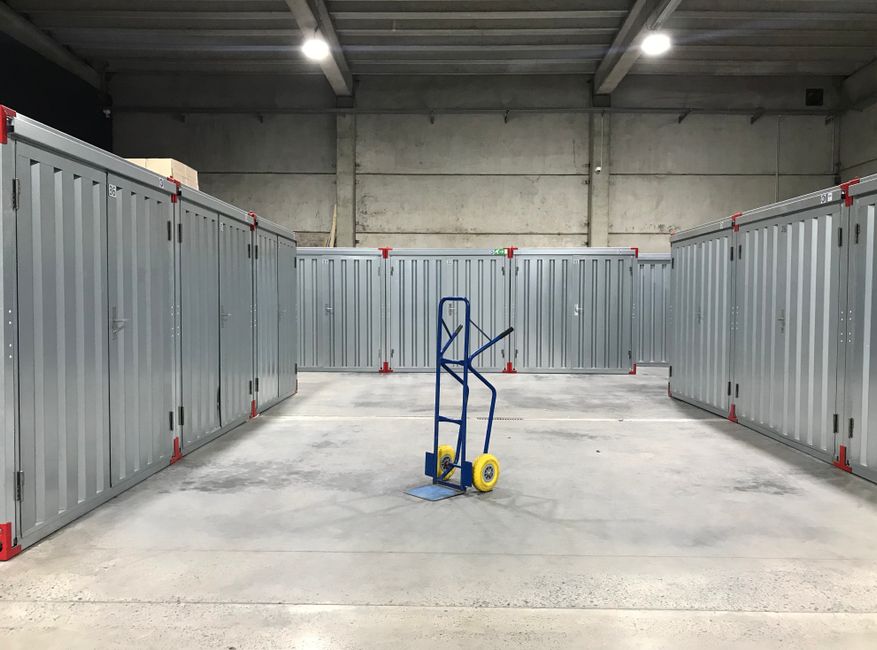
Cardboard jackets absorb moisture, and damp cardboard against a paper sleeve is exactly the environment mold needs. Keep boxes off the floor on a pallet or shelf, leave a little airflow around stacked boxes rather than pushing them flush against a wall, and avoid storing records in a basement-style unit prone to dampness.
Record boxes belong on a shelf or pallet, positioned away from direct sunlight and away from the door, where temperature swings are most extreme. Never place heavier, unrelated items on top of record boxes just because the box looks sturdy from the outside.
Inside the unit, treat record boxes the way you would treat a box of anything fragile: bottom layer if boxes are labeled and reinforced for stacking, or a dedicated shelf if you have the space. Label each box clearly with "Records: Store Upright" so that anyone moving things around later, including you in six months, does not accidentally lay a box on its side.
Yes, if the collection has any real value or you plan to store it for more than a couple of months. The cost difference between a standard and climate-controlled unit is small compared to the cost of replacing warped or moldy records, especially rare or original pressings.
If you are not sure which option fits your timeline and budget, it helps to talk through the specifics with a provider who handles both. BC Brothers Moving's climate-controlled storage services are set up for exactly this kind of long-term, temperature-sensitive item, and staff can walk you through unit sizing before you commit to a lease. For collectors who are also relocating at the same time, it is worth coordinating storage with the move itself rather than treating them as two separate errands; our residential moving services team can transport boxed records directly into a storage unit as part of the same trip.
A short supply run saves a lot of regret later. At minimum, get sturdy boxes, packing tape, and poly sleeves if your records still have their original paper inserts. BC Brothers' packing supplies selection covers the boxes and tape most people need for this kind of project, and having the right materials on hand before you start means you are not improvising with whatever cardboard is lying around the garage.
Once boxes are packed, sealed, and labeled, the last step is simply resisting the urge to cram them into whatever gap is left in the unit. Vinyl rewards a little patience during setup, and it shows in how the collection sounds and looks whenever you finally pull it back out.
BC Brothers Moving & Storage is a locally owned, licensed and insured moving company rated 4.9 stars across 800+ reviews. Residential, commercial, long-distance, packing and storage — handled by one crew.
Movers in Savannah·Residential Moving·Packing Services·Long-Distance Moving·Storage

.svg)








.svg)
.svg)