Serving Savannah, GA & Austin TX

.png)
Mon - Sunday: 8am- 8pm

.svg)

Knowing how to pack paintings for a move is essential if you want to protect artwork from scratches, dents, moisture, or breakage. Paintings are often fragile, sentimental, or valuable, which makes them especially vulnerable during a move. Unlike standard household items, artwork requires careful handling, proper materials, and a thoughtful packing process.
Whether you are moving across town or relocating long distance, taking the time to pack paintings correctly can prevent costly damage and emotional loss. Many homeowners choose professional residential moving services to ensure delicate belongings like artwork are handled safely from start to finish.
Paintings are exposed to several risks during a move. Canvas can tear, frames can crack, glass can shatter, and surfaces can scratch if items shift during transport. Temperature changes, humidity, and pressure from other items can also damage artwork if it is not properly protected.
Unlike furniture or boxed items, paintings have delicate surfaces that cannot be stacked carelessly. Proper packing creates a protective barrier against impact, vibration, and environmental factors that commonly occur during moving.
Using the correct materials is one of the most important steps when learning how to pack paintings for a move. High quality supplies help absorb shock and keep surfaces from rubbing or sticking together.
Essential materials include packing paper, bubble wrap, cardboard sheets, corner protectors, moving blankets, painter paper, stretch wrap, tape, and sturdy boxes or mirror cartons. Avoid using newspaper directly on painted surfaces, as ink can transfer and damage artwork.
Before wrapping any painting, inspect it carefully. Make sure the surface is clean and dry. Dust or debris trapped during packing can scratch the artwork. If the painting has glass, check for cracks or loose areas.
Remove hanging hardware if it protrudes or could puncture wrapping materials. If the painting has an ornate or fragile frame, extra padding around corners and edges is essential.
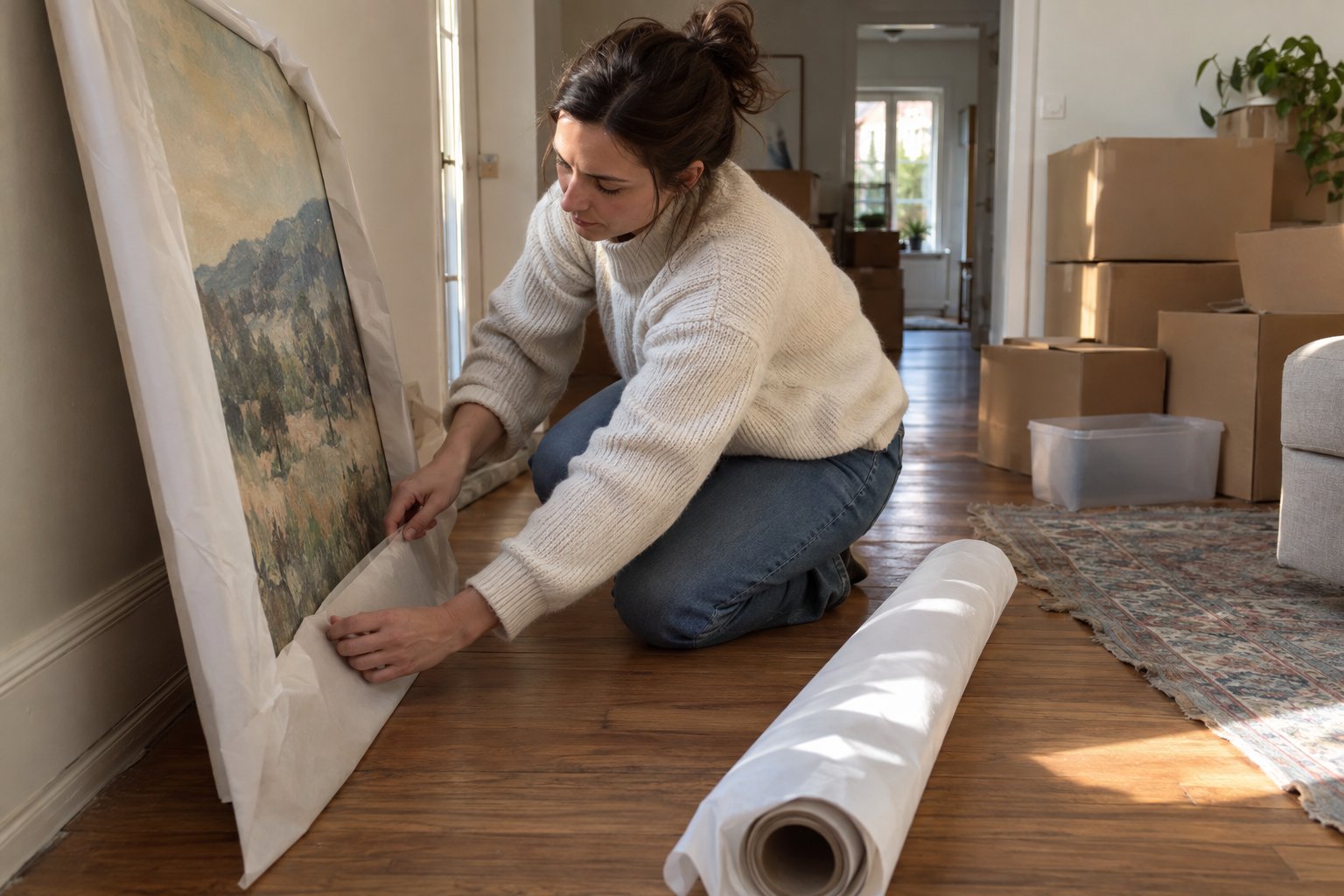
The painted surface should always be protected before adding padding. Place a sheet of clean packing paper or painter paper over the front of the painting. This layer prevents bubble wrap or padding from sticking to the paint, especially in humid conditions.
Never allow plastic wrap or bubble wrap to touch the painted surface directly. Direct contact can cause texture damage or peeling, particularly with older or textured artwork.
For paintings without glass, start by covering the surface with paper, then add bubble wrap around the entire piece. Focus on corners and edges, as these areas are most vulnerable.
Secure the wrap with tape, making sure tape never touches the artwork itself. The wrap should be snug but not overly tight, allowing slight flexibility while still protecting the piece.
Paintings with glass require extra caution. First, apply painter tape in a crisscross pattern across the glass surface. This helps contain shards if the glass breaks.
Next, cover the front with packing paper, followed by bubble wrap. Add cardboard sheets to both the front and back for added rigidity. Secure everything with tape, again avoiding direct contact with the artwork.
Corner protectors add an extra layer of defense against impact. If you do not have commercial protectors, folded cardboard can serve as a substitute. Corners are often the first areas to hit doorways, walls, or other items during a move.
Placing cardboard panels on both sides of the painting creates a flat, protective shell that reduces bending and pressure during transport.
Whenever possible, use a mirror box or adjustable artwork carton. These boxes are designed to hold flat items securely and allow you to adjust the size to fit the painting.
If a specialty box is not available, use a sturdy box slightly larger than the wrapped painting. Fill any empty space with padding so the painting does not shift during transit.
If packing more than one painting in the same box, place cardboard sheets between each wrapped piece. Stack paintings vertically rather than flat to reduce pressure.
Never allow painted surfaces to touch each other. Proper separation prevents scratching and pressure damage during movement.
Clearly label boxes containing paintings as fragile. Indicate which side should face up and note that artwork is inside. While labels do not guarantee careful handling, they do increase awareness.
Proper labeling also helps you remember where artwork is placed in the truck so it can be unloaded first and stored safely.
Paintings should always be loaded vertically, never laid flat under heavy items. Place them against a solid wall of the truck, such as the side or front, and secure them with straps.
Avoid placing paintings near items that could shift or fall. Keeping artwork upright and secured minimizes vibration and pressure during transit.
Extreme temperatures and humidity can damage paintings, especially canvas and older pieces. Avoid leaving artwork in a truck for extended periods in hot or cold weather.
If possible, transport valuable paintings in a climate controlled environment or move them personally rather than placing them in long term storage.
One common mistake is rushing the packing process. Skipping layers or using improper materials increases the risk of damage. Another mistake is stacking paintings flat, which can cause cracking or bending.
Using plastic wrap directly on painted surfaces is also a frequent error. Always create a protective paper barrier before applying any padding.
Some paintings have high monetary or sentimental value and require expert handling. Professional movers understand how to pack paintings for a move using industry tested materials and techniques.
Large artwork, antiques, and custom framed pieces often benefit from professional packing services that reduce risk, save time, and provide peace of mind.
Packing artwork properly takes patience and attention to detail. If you prefer experienced help, BC Brothers offers reliable moving support focused on protecting delicate items like paintings.
Their team also specializes in long-distance moving services, ensuring artwork remains secure during extended travel and multi-day transport.
For guidance or professional assistance with your move, you can contact BC Brothers at info@bcbrothersmoving.com or call (912) 658-5700. Their team is available to help ensure your belongings are handled with care from start to finish.
1. What is the safest way to pack paintings for a move?
The safest way is to protect the painted surface with clean paper, add bubble wrap for cushioning, reinforce with cardboard, and place the painting in a sturdy box or mirror carton. Keeping paintings upright during transport further reduces the risk of damage.
2. Should paintings be packed flat or upright during a move?
Paintings should always be packed and transported upright. Storing them flat increases pressure and the chance of cracking or bending. Upright placement against a solid surface with proper strapping helps protect frames and painted surfaces.
3. Can I pack multiple paintings in one box safely?
Yes, multiple paintings can be packed together if each is wrapped individually and separated by cardboard. They should be stacked vertically with padding between each piece to prevent contact and movement during transport.
4. Is bubble wrap safe to use directly on paintings?
Bubble wrap should never touch the painted surface directly. Always place a layer of clean packing paper over the artwork first. This prevents sticking, texture damage, and surface transfer that can occur with direct plastic contact.
5. When should I consider professional packing for paintings?
Professional packing is recommended for valuable, antique, oversized, or sentimental artwork. Experienced movers use proper materials and techniques that significantly reduce the risk of damage and provide peace of mind during the moving process.
BC Brothers Moving & Storage is a locally owned, licensed and insured moving company rated 4.9 stars across 800+ reviews. Residential, commercial, long-distance, packing and storage — handled by one crew.
Movers in Savannah·Residential Moving·Packing Services·Long-Distance Moving·Storage

.svg)


.svg)
.svg)